Liberia is trying to turn a diplomatic meeting in Shanghai into something more useful at home: cheaper exports to China, Chinese factories and farms operating in Liberia, and more reliable electricity. The real question is whether the promises become jobs, lower business costs, and opportunities for people who need them not just another set of announcements.
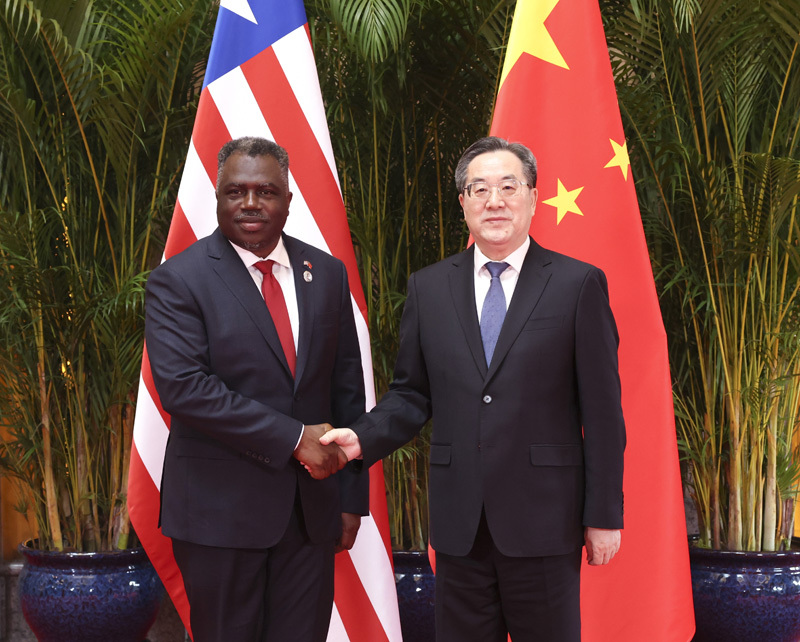
Vice President Jeremiah Kpan Koung met Chinese Vice Premier Ding Xuexiang in Shanghai on November 5, 2026, during the ninth China International Import Expo. Liberia asked for deeper cooperation in trade, agriculture, manufacturing, energy, infrastructure, healthcare, digital connectivity and vocational training.
China responded positively, saying it would encourage more Chinese firms to explore investment in Liberia, support agricultural imports, and continue work on infrastructure and laboratory projects. It also pledged scholarships and professional training for Liberians.
Why the China market matters
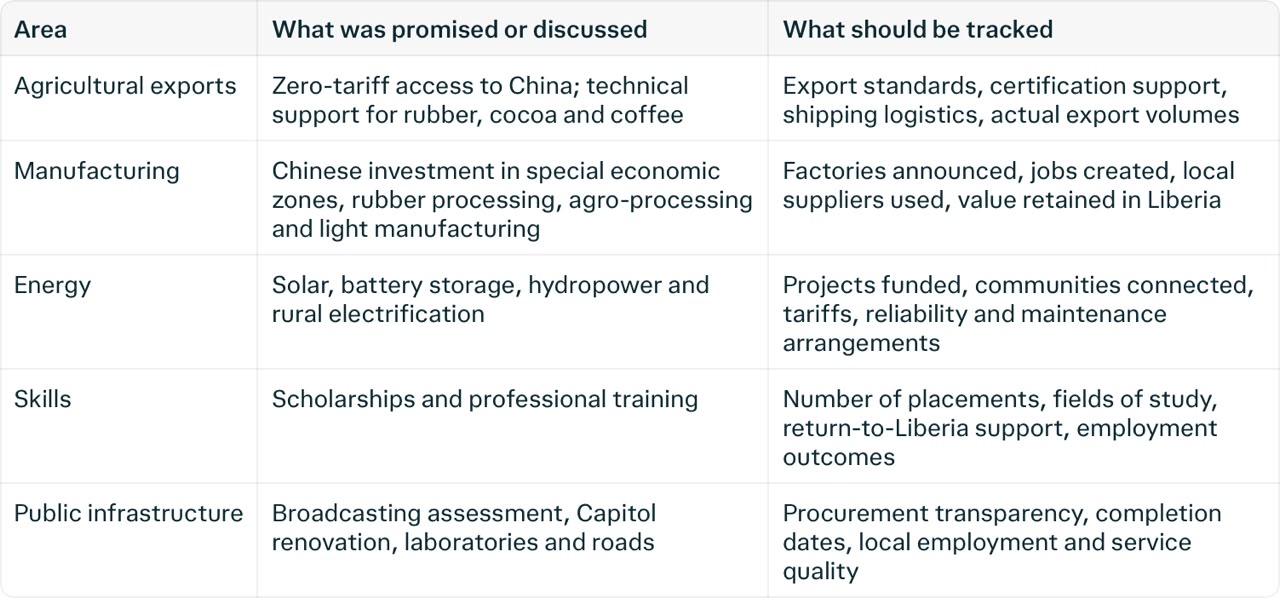
China’s zero-tariff policy is the biggest immediate opening. It reduces the cost of selling Liberian goods into China, making products such as rubber, cocoa and coffee more competitive if Liberian producers can meet the quality, packaging, certification and documentation standards required for export.
The numbers show why this matters. Liberia’s exports to China exceeded US$629 million in the first nine months of 2026, rising more than eightfold year on year, according to the Chinese Embassy in Liberia.
But exporting raw commodities alone will not transform livelihoods. The stronger opportunity is processing: turning rubber into higher-value products, processing cocoa and coffee locally, and building light manufacturing around Liberia’s special economic zones. That is where more of the money, skills and jobs can stay in the country.
The energy problem
Koung made electricity the centre of the pitch, seeking Chinese support for solar power, battery storage, hydropower and rural electrification. That is practical, not abstract: unreliable power raises the cost of running a shop, farm, workshop, clinic, school or small factory.
For anyone trying to build a business in Liberia, electricity is often the difference between a viable operation and a costly one. Solar, batteries and better rural connections could reduce generator dependence, make production more predictable, and open the door to agro-processing and light manufacturing outside Monrovia.
What is still missing
The meeting produced direction, not delivery. China asked Liberia to identify companies eligible to export to China; that shifts responsibility to Liberian institutions to provide accurate information, certification pathways, quality control and practical support for producers.
The other gap is follow-through. Koung proposed designated focal persons and specific projects so talks can be tracked beyond Shanghai. Without named projects, timelines, budgets, local-content requirements and maintenance plans, “cooperation” can remain a press release.
What to watch next
What people should do
• Producers and export-minded businesses: prepare for the Chinese market now standardised packaging, traceable sourcing, quality certification, reliable supply volumes and correct export documentation. China’s request for a list of eligible exporters means readiness will determine who benefits.
• People seeking work or skills: focus on areas tied to the announced priorities solar installation and maintenance, electrical work, agro-processing, logistics, quality control, digital services, construction and vocational trades. China’s pledged training and scholarships could become direct entry points.
• Small businesses: watch electricity projects closely. If solar, storage or rural electrification becomes real, it can lower operating costs and make processing, refrigeration, digital services and small-scale manufacturing more realistic.
• Communities and civil society: demand project-level details: where money is going, who gets hired, whether local suppliers are used, how equipment will be maintained, and when promised infrastructure will actually serve people.
• Government institutions: publish the exporter list, simplify certification, connect producers to buyers, and report progress publicly. The opportunity is only useful if ordinary producers can access it without political connections or impossible paperwork.
The stakes are straightforward: China has opened a wider door for Liberian goods and signalled interest in investing in Liberia’s productive economy. Liberia now has to build the systems power, skills, standards, logistics and accountability that allow people inside the country to walk through it.