
Uganda Launches National Energy Compact to Expand Electricity and Clean Cooking Access
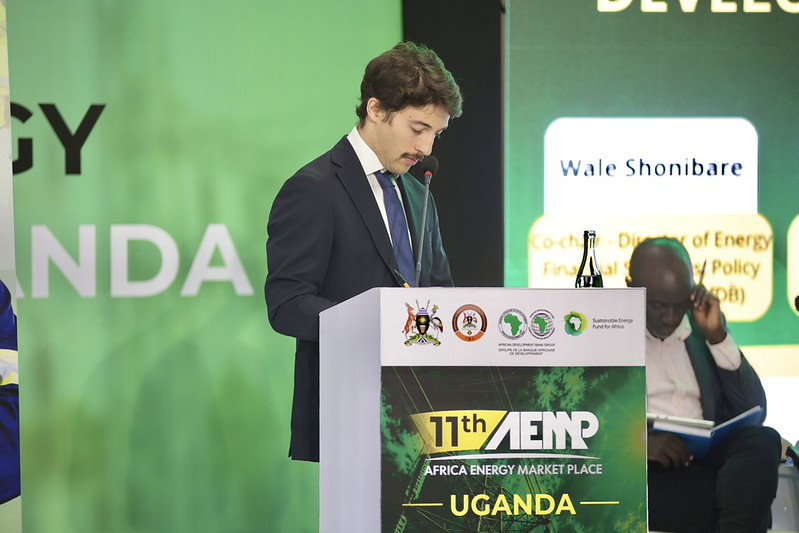
Uganda has launched its National Energy Compact at the 11th Africa Energy Market Place (AEMP) in Kampala, setting a target of 85 percent electricity access and 50 percent access to clean cooking by 2030. The compact is designed to support the country’s path toward universal energy access under Vision 2040 and requires an estimated $9.44 billion in additional private capital.
The African Development Bank Group and the Government of Uganda, through the Ministry of energy and Mineral Development, officially launched the compact on 22 October 2026 at the Kampala Serena Hotel. The two-day forum, held from 21 to 22 October, was themed “From Mission 300 to Vision 2040: Delivering Uganda’s Energy Ambition.”
Energy compacts are detailed, data-driven frameworks that set national targets, policy reforms, and resource commitments to support Mission 300 a joint initiative by the African Development Bank Group and the World Bank Group to connect 300 million additional Africans to electricity by 2030.
Key Outcomes of the Forum
Participants at the forum developed a Uganda Energy Access Investment Brief aligned with Mission 300. They identified:
• Category A projects expected to be operational by the end of 2030.
• Category B projects expected to reach financial close within the same period.
• Policy and regulatory reform recommendations, with defined implementation timelines.
• A new Compact Delivery and Monitoring Unit within the Ministry of Energy and Mineral Development to oversee implementation and accountability.
The forum brought together government ministers, utility leaders, the Electricity Regulatory Authority, development partners, and private investors. Uganda’s Ministers of Energy, Finance, Agriculture, Science, Technology and Innovation, and Water and Environment participated in an interministerial panel, underscoring the compact’s status as a national priority.
Uganda’s Prime Minister, Robinah Nabbanja, formally launched the compact, describing it as long overdue and calling on private sector actors to play an active role in the country’s energy transformation.
“The value of energy investments is seen in the opportunities it creates for our people reliable electricity that makes irrigation, processing and cold storage possible for a farmer” .
Energy Minister Monica Masanza said the compact converts Uganda’s longstanding ambition into a practical delivery plan.
“Uganda has never lacked ambition,” Masanza said. “This compact adds a delivery plan with dates, owners and financing behind it. This forum has given us what we asked for our partners, our utilities, our regulators and our investors around one table, agreeing how to move together. Uganda is ready to deliver.”
Kevin Kariuki, the African Development Bank Group’s Vice President for Power, Energy, Climate and Green Growth, said Uganda’s renewable energy potential and planned reforms could strengthen its role in the East African Power Pool. He highlighted the country’s untapped baseload renewable resources and reforms supporting independent transmission projects.
Uganda’s 2030 Energy Targets
The compact sets out several major goals for 2030:
• 85 percent national electricity access.
• 50 percent access to clean cooking.
• Approximately 2,500 MW of operational generation capacity.
• A further 5,800 MW at financial close for commissioning after 2030.
• 2,712 mini-grids.
• Regional electricity exports of 500 to 650 MW.
• Total investment mobilisation of $17.7 billion, including $9.4 billion in private capital.
Wale Shonibare, Director for Energy Financial Solutions, Policy and Regulation at the African Development Bank Group, said the AEMP is intended to create the conditions needed for private investment through reforms, financing instruments, and institutional clarity.
“Uganda has done what every compact is meant to do, matching a bold national vision with a delivery plan that partners and investors can finance today,” Kariuki added.
The Uganda Energy Compact was first presented at the Africa Energy Forum in June 2026 as part of the third cohort of Mission 300 countries. The AEMP in Kampala served as the first formal consultation on its implementation.
The newly established Compact Delivery and Monitoring Unit is expected to publish its first semi-annual progress report in December 2026.
About the Initiatives
The Africa Energy Market Place, launched in 2018 is the African Development Bank Group’s flagship policy dialogue platform for the energy sector. Twenty-six countries including Uganda have engaged with the Bank through the platform.
Mission 300 aims to connect 300 million additional Africans to electricity by 2030, with the African Development Bank Group responsible for 50 million of those connections. In June 2026, the partnership reported that more than 50 million people across 40 countries had already been connected, at nearly double the pace recorded at the initiative’s launch.