
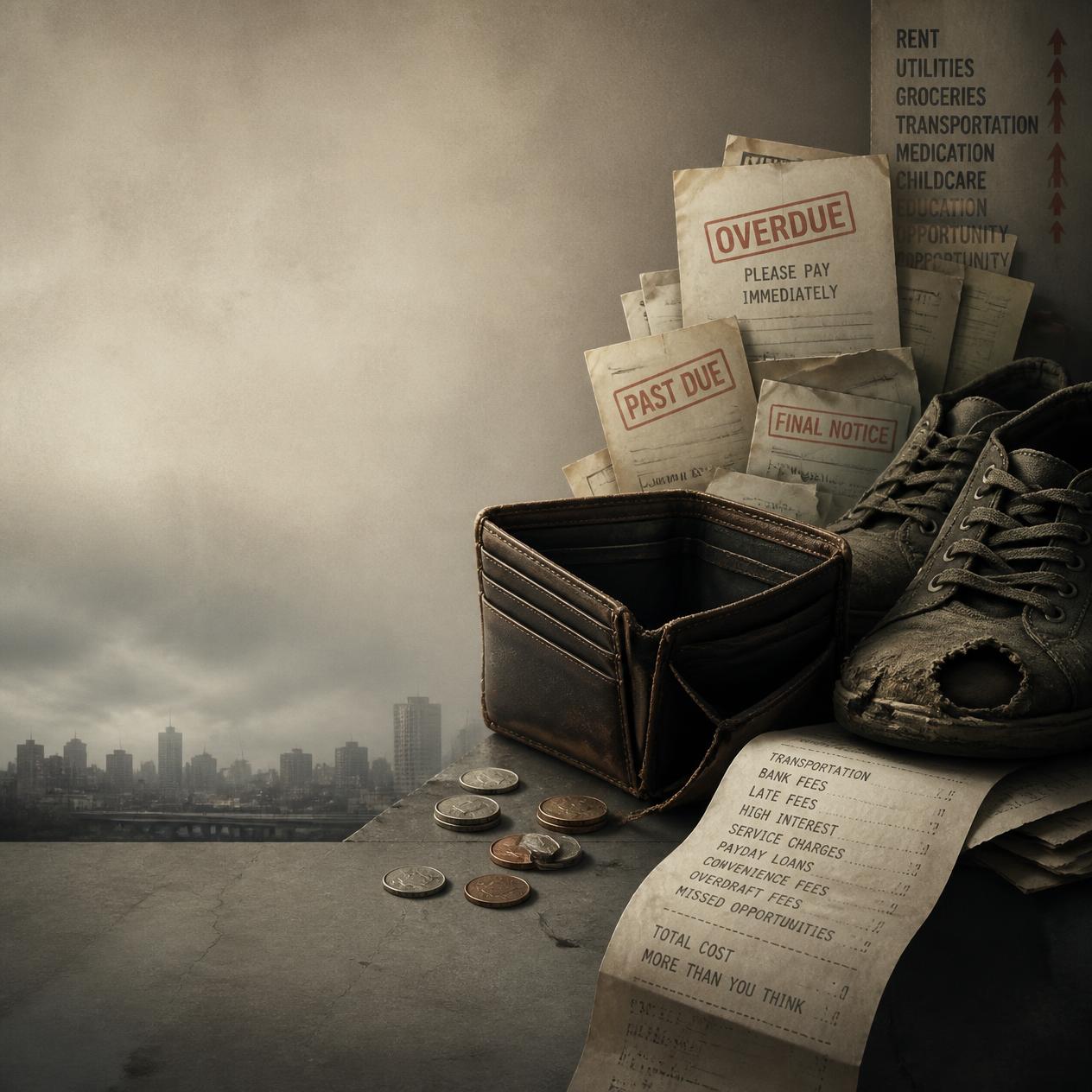
There’s a version of poverty most economists never quite capture. It’s not just that poor people have less, It’s that they pay more for the same things and get locked out of the cheaper way of living altogether. This means that poverty cannot be viewed as the shortage of income or assets alone but as an elevated effective price level
Think about it plainly. A liter of kerosene bought by the cup, one at a time, costs more per liter than the same kerosene bought by the drum. A loan from a lending app costs more, by a wide margin, than a loan from a bank. And a country like Nigeria pays a steeper interest rate on its debt than a country like the UK, for reasons that turn out to have less to do with actual risk than we’re usually told.
None of this is an accident of bad luck. It’s a system, and it runs on the same logic whether you’re a single mother buying fuel in Lagos or a finance ministry issuing a Eurobond. Poverty isn’t a shortage of money. It’s a surcharge on everything.
The tax on being small
Start at the household level, because it’s the most intuitive. If you don’t have enough cash to buy in bulk, you buy small and small is always more expensive per unit. Fuel by the cup instead of the tank. Data by the day instead of the month. Rice by the “paint” instead of the bag. Every one of these carries a hidden markup that a person with more cash simply never pays, because they never have to buy that way.
Credit works the same way, only sharper. If you don’t have collateral, a payslip, or a fixed address, the formal banking system has no product for you. So, you turn to informal lenders, cooperative savings groups, or one of the lending apps that has become impossible to avoid in Nigeria over the last few years, and you pay an interest rate that would make a bank loan look like a gift. You end up borrowing at the highest rate available, to solve exactly the problems that people with money never have to borrow for in the first place.
And then there’s the absence of a buffer. No savings, no insurance, means every shock, an illness, a bad trading season, a stolen phone, has to be absorbed by selling something or borrowing at that same punishing rate. A person with money treats a crisis as an inconvenience. A person without money treats it as a reset button on years of progress.
Zoom out, and the country does the exact same thing
Here’s the part that made me want to write this piece rather than just complain about it: countries pay this identical penalty, at scale.
Governments borrow money the same way people do. They issue debt, and lenders price it according to how risky they think the borrower is. On average, developing countries pay roughly three times the interest cost on their external borrowing that developed countries do. Some of that gap is genuine risk. But not all of it.
Look closer at how credit rating agencies actually score countries, and a pattern shows up that should bother you: emerging economies get scored more harshly than rich ones with comparable fundamentals, sometimes independent of the actual numbers. One striking comparison found that a group of the world’s most heavily indebted poor countries carried worse credit ratings than a set of rich countries running even higher debt loads. Worse ratings mean higher borrowing costs. Higher borrowing costs mean less money for roads, hospitals, and schools, and more money going to debt service which then makes the next round of borrowing even more expensive. It’s the sovereign version of the loan-shark trap, dressed up in the language of financial markets.
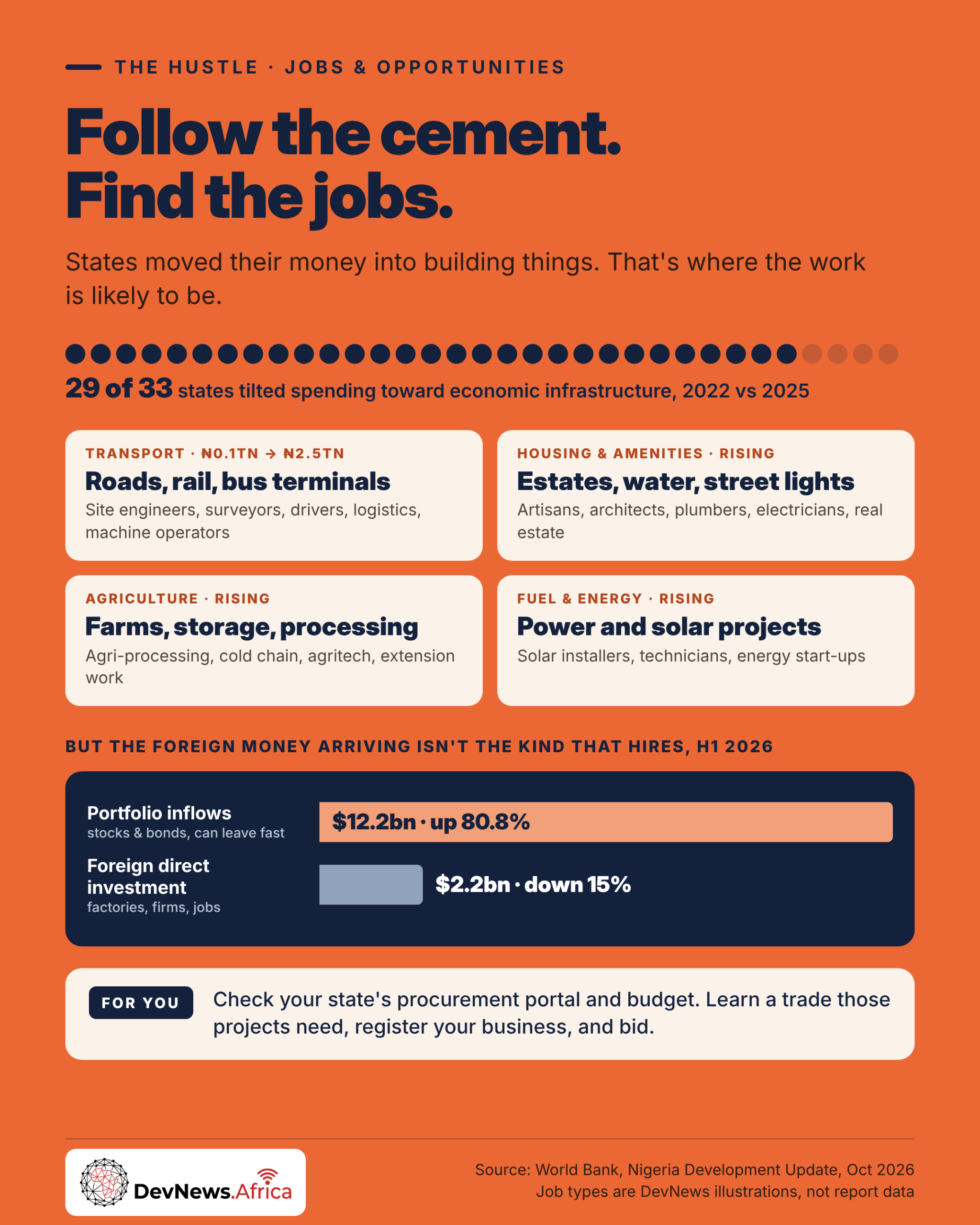
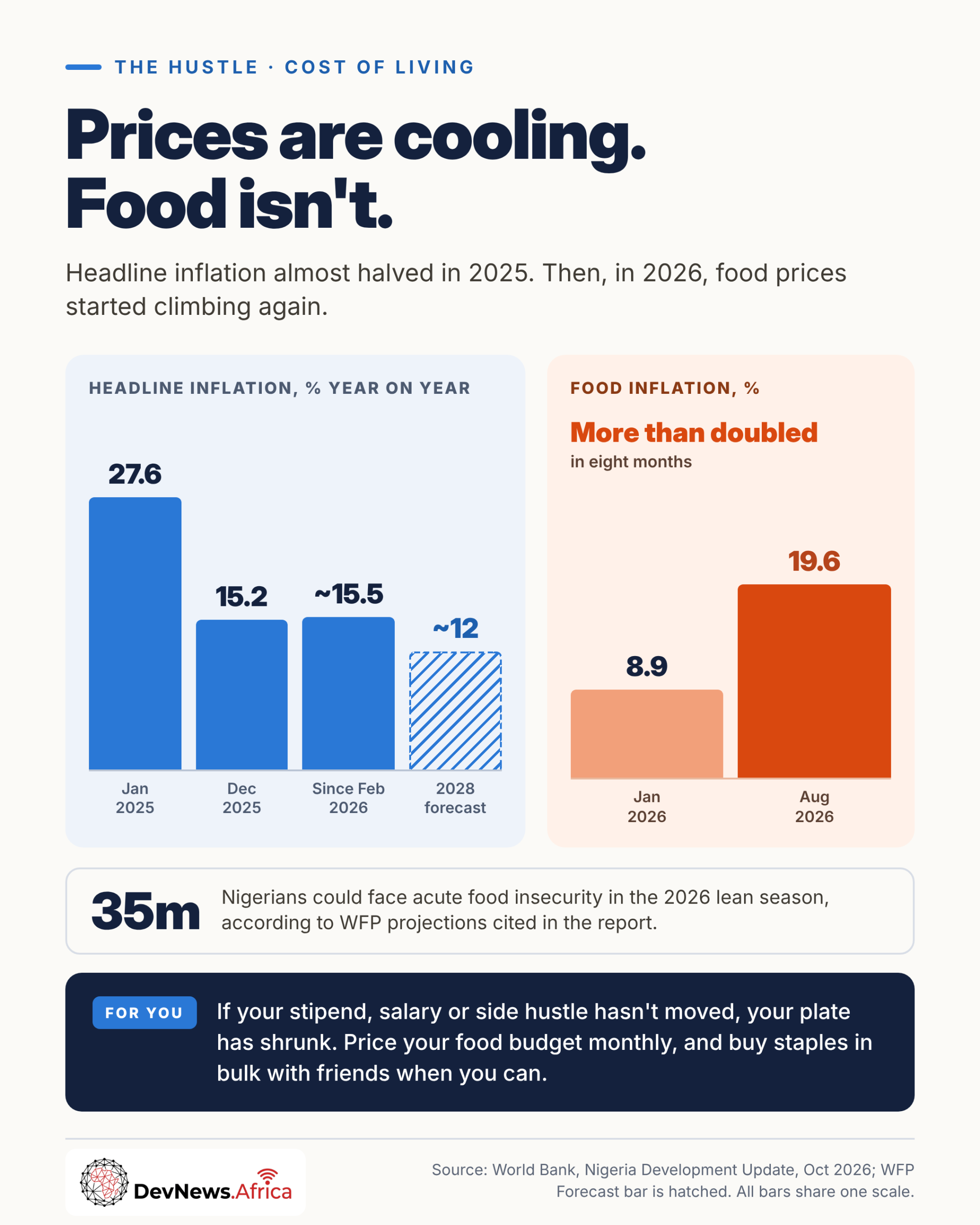
Nigeria doesn’t need a hypothetical example. Since the 2023 devaluation, the naira’s fall has moved straight through to the price of fuel and food, because we import so much of what we consume. That’s the country-level version of the “buying small costs more” problem; we pay more per unit for the same basket of goods, not because the goods changed, but because the exchange rate did. A poorer country, like a poorer household, absorbs the same shock with none of the cushioning.
Why this becomes a trap, not just a cost
This is the part I think matters most, and it’s where the story stops being about unfair prices and starts being about locked doors.
Most things you can’t afford just cost you money. But a few things you can’t afford cost you the ability to earn money at all, and that’s what turns a penalty into a trap.
Take childcare. A mother who can’t afford a nanny or daycare can’t take a job that requires her to leave home. No job means no income. No income means she still can’t afford the childcare that would have let her take the job in the first place. It’s not a cost she pays once, it’s a door that stays locked, because the thing on the other side of it is the exact thing she’d need to open it.
Health works the same way. No money for a checkup means a small problem is caught late, when it’s expensive and disruptive instead of cheap and manageable. Treating it late costs money and costs working days, which leaves even less money for the next checkup. The trap resets itself.
And underneath both of these sits something researchers have actually measured: being financially stretched taxes your mental bandwidth. Studies on scarcity have found that acute financial strain can degrade decision-making by an amount comparable to a meaningful drop in IQ, not because poor people think differently, but because a brain preoccupied with “how do I cover this” has less room left for anything else. This matters because so much of how we talk about poverty; “they made bad decisions,” “they should have planned better”, quietly assumes an unlimited mental budget that scarcity itself removes. Before you judge a decision made under financial strain, it’s worth asking what decision you’d make with a fraction of the bandwidth.
The actual point
Being poor is expensive not because poor people spend badly, but because the system prices poverty as risk , at the corner shop and in the bond market alike, and then, cruelly, some of what gets priced out of reach is exactly what a person or a country would need to stop being poor.
That’s the currency poverty trades in. You don’t just have less. You pay more for less, and the things that would let you pay less are the first things you lose access to.
This piece is the first cut of a longer paper I’m working on, which digs into the data behind each of these claims, informal lending rates, Nigeria’s borrowing costs against comparable economies, and the mechanics of the childcare and health traps. If that’s useful to you, subscribe and I’ll share it when it’s ready.