
Its not everyday DFI’s and IFI’s have grant opportunities but…..
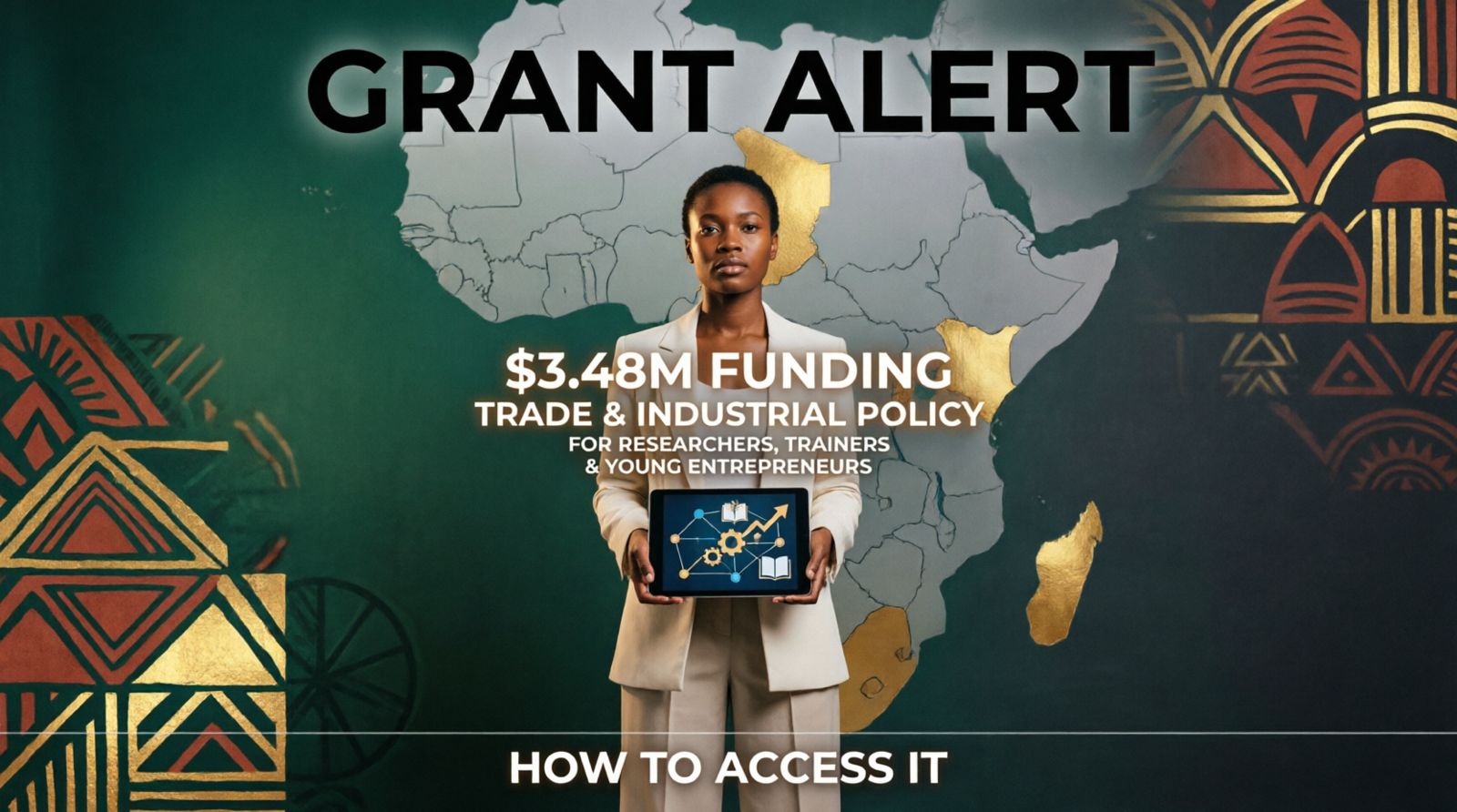
……$3.48 million just dropped. Not for roads. Not for dams. For something quieter but more powerful: data, training, and policy design that could reshape trade in five African countries.
If you’re in Cameroon, Chad, Comoros, Madagascar, or Togo and you work in trade, policy, research, or run a business, this grant isn’t just news. It’s an opportunity.
Let’s break down what just happened, how this money actually flows, and how you can plug into it.
WHAT JUST GOT APPROVED
The African Development Fund (ADF); the concessional lending arm of the African Development Bank; approved $3.48 million on July 13, 2026.
Purpose: To strengthen industrial and trade policy design in five “transition economies” by:
- Conducting impact assessments of the African Union’s industrial development framework (AIDA)
- Supporting AfCFTA implementation
- Building institutional capacity for data collection and policy coordination
- Integrating climate, gender, and SME indicators into national monitoring systems
Implementing agency: AUDA-NEPAD (African Union Development Agency), working with national institutions and regional stakeholders.
Beneficiaries listed: Public officials, trade analysts, academics, government ministries, development agencies, regional economic communities, and businesses led by women and young people.
Notice that last category: businesses led by women and young people.
That’s not accidental. That’s an invitation.
HOW THIS TYPE OF GRANT ACTUALLY WORKS
Let’s demystify the machinery.
Step 1: Approval
The ADF Board approves the grant. Money is allocated, but not disbursed all at once. It’s tranched; released in phases as milestones are hit.
Step 2: Implementation Structure
AUDA-NEPAD becomes the lead implementer. They don’t do everything themselves. They:
- Contract technical experts
- Partner with national institutions (ministries of trade, statistics bureaus, universities)
- Issue calls for consultants, trainers, and data analysts
- Organize workshops and training sessions
Step 3: Capacity Building Delivery
The project delivers:
- Tailored training for each country
- Multilingual learning materials
- Practical exercises in data collection and validation
- On-the-ground technical support
- Standardized methodologies for policy assessment
Step 4: Beneficiary Engagement
This is where individuals and businesses plug in. The project doesn’t just train government officials. It’s supposed to engage:
- Academics (researchers, lecturers, PhD candidates)
- Trade analysts (consultants, private sector advisors)
- Development agencies (NGOs, think tanks)
- Women and youth-led businesses (especially those affected by trade policy)
Step 5: Data & Policy Integration
The whole point: produce evidence that shapes actual policy. Better data → better trade rules → better business environment → more inclusive growth.
HOW YOU CAN ACTUALLY KEY INTO THIS
You’re not a minister. You’re not a high-level bureaucrat. Can you still benefit? Yes. Here’s how:
1. If You’re a Researcher, Academic, or Data Analyst
- Watch for consultancy calls: AUDA-NEPAD and national institutions will issue requests for proposals (RFPs) for data collection, validation, and analysis. These are often advertised on:
- AUDA-NEPAD website
- National government procurement portals
- University research offices
- LinkedIn and professional networks
- Position yourself: If you have expertise in trade economics, industrial policy, climate data, or gender analysis, register your profile with relevant ministries and AUDA-NEPAD’s consultant database.
- Collaborate: Partner with universities or think tanks already engaged in the project. Consortia often win contracts over individuals.
2. If You’re a Trainer or Capacity-Building Specialist
- The project explicitly includes “training tailored to each national context” and “multilingual learning materials.”
- Opportunity: Curriculum developers, facilitators, and instructional designers with trade/policy expertise may be contracted to:
- Design training modules
- Deliver workshops
- Translate materials into local languages
- Create e-learning content
- Action: Reach out to your country’s Ministry of Trade or Industry. Ask if they’re participating in the ADF-funded capacity-building program. Express interest in contributing as a trainer or content developer.
3. If You Run a Business (Especially Women or Youth-Led)
- The grant explicitly names “businesses led by women and young people” as beneficiaries.
Why you matter: Trade and industrial policy affects you directly – tariffs, import/export rules, standards, licensing, access to finance.
How to engage: - Participate in consultations: The project will likely conduct stakeholder consultations to gather input on policy design. These are opportunities to voice your challenges and recommendations.
- Join business associations: Chambers of commerce, women’s business networks, and youth entrepreneur platforms are often invited to policy dialogues.
- Access training: The capacity-building component may include sessions for private sector actors on understanding new trade rules, AfCFTA opportunities, and compliance requirements.
- Leverage better data: As the project improves data quality and policy coherence, the business environment should become more predictable. Use this to your advantage-advocate for transparency, track policy changes, and align your strategy accordingly.
4. If You’re a Civil Society Advocate or NGO Worker
- Monitor implementation: Track whether the project delivers on its promises-especially around gender, climate, and SME inclusion.
- Demand accountability: Use freedom of information requests, public hearings, and media engagement to ensure data and training reach marginalized groups.
- Bridge the gap: Translate technical policy language into accessible formats for communities and small businesses.
WHAT TO WATCH FOR (CONCRETE SIGNALS)
Don’t wait for a press release. Watch for these indicators that the project is moving:
National focal points appointed: Each country should designate a lead ministry or agency coordinating with AUDA-NEPAD. Find out who it is.
Inception workshops announced: These are usually the first public-facing events. They’re open to stakeholders. Attend.
Consultancy tenders published: Check procurement portals regularly. Search keywords: “trade policy,” “impact assessment,” “capacity building,” “data collection.”
Training schedules released: Ministries of Trade, Industry, or Education will announce workshops. Register early.
Stakeholder consultation invitations: Business associations, universities, and NGOs are often invited to provide input. Make sure you’re on the list.
THE REALITY CHECK
Let’s be honest: $3.48 million sounds like a lot. Spread across five countries, multiple institutions, years of implementation, and countless activities? It’s not infinite.
Competition will be fierce. Consultants will bid against each other. Businesses will compete for limited training slots. Ministries may move slowly.
Your advantage? Preparation.
- Build your profile now.
- Network with relevant institutions.
- Develop expertise in trade, data, climate, or gender analysis.
- Stay informed about AfCFTA and industrial policy developments.
- Don’t wait for opportunities to find you. Go after them.
THE DNA TAKE
Grants like this don’t just fund governments. They create ecosystems – consultancies, trainers, researchers, businesses, advocates – all engaged in shaping better policy.
You don’t need to be a minister to benefit. You need to be informed, connected, and ready.
The money is approved. The framework is set. The implementation is starting.
Now it’s about who shows up.
This grant is a vehicle. Your job is to get on board.