Let’s be honest: most policy reports gather dust. They’re dense, diplomatic, and designed to sound important without actually saying anything controversial.
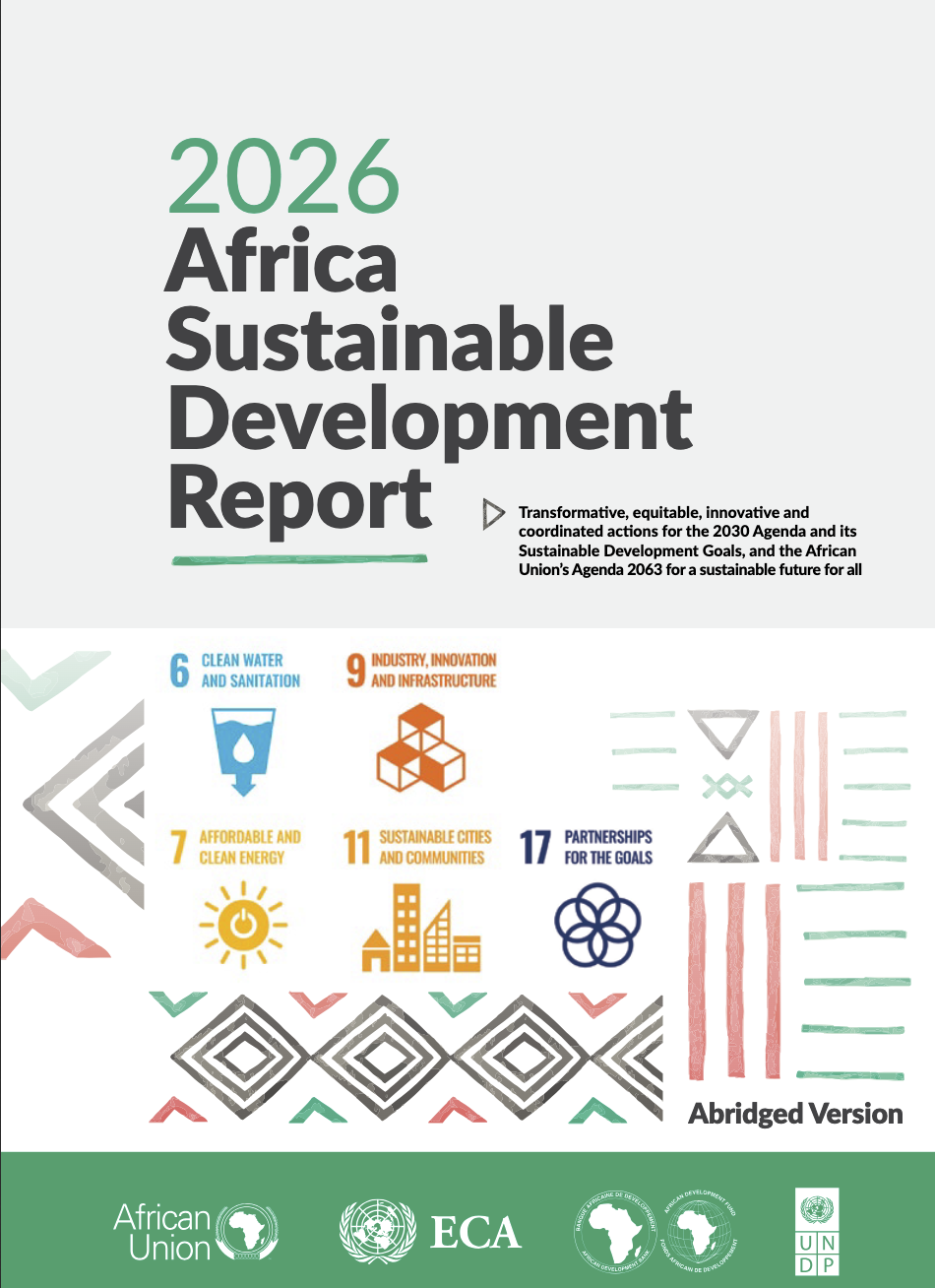
The Africa Sustainable Development Report 2026 is different. And with less than five years left to hit the 2030 targets, ignoring it is a luxury nobody can afford.
Here are five reasons why this document deserves your attention – whether you’re a policymaker, researcher, entrepreneur, or just someone who cares about where this continent is headed.
1. IT’S THE ONLY SCORECARD THAT TRACKS BOTH AGENDAS
Most reports track either the UN’s Sustainable Development Goals (SDGs) or the African Union’s Agenda 2063. The ASDR tracks both – simultaneously.
Why does that matter? Because these aren’t parallel journeys. As AU Commission Deputy Chairperson Ambassador Selma Malika Haddadi put it: “Agenda 2063 and the 2030 Agenda are not parallel journeys; they are one shared roadmap towards a prosperous, inclusive and sustainable Africa.”
If you’re trying to understand how continental priorities align with global commitments – or where they clash – this is your source. No other publication systematically connects the two.
2. IT TELLS YOU WHERE AFRICA IS ACTUALLY WINNING (AND WHERE IT’S LOSING)
The 2026 edition focuses on five critical SDGs:
- SDG 6: Clean water and sanitation
- SDG 7: Affordable, clean energy
- SDG 9: Industry, innovation, and infrastructure
- SDG 11: Sustainable cities and communities
- SDG 17: Partnerships for the goals
The findings are blunt: progress is measurable but uneven. Some areas are moving forward. Others are stalled. And overall, the continent is not on pace to meet 2030 targets.
Financing constraints. Climate shocks. Rising debt. Institutional capacity gaps. These aren’t abstract challenges – they’re the specific bottlenecks slowing delivery.
If you’re investing, advocating, or building solutions, you need to know where the friction points are. This report maps them.
3. IT’S NOT JUST DIAGNOSIS—IT’S PRESCRIPTION
Most reports stop at “here’s the problem.” The ASDR goes further: “here are practical policy options to accelerate implementation.”
That distinction matters. It’s the difference between a post-mortem and a treatment plan.
The report doesn’t just say “infrastructure is inadequate.” It points to specific gaps in water, energy, transport, and digital connectivity and offers pathways to close them. It doesn’t just note that climate resilience is urgent. It highlights where climate-smart investment can deliver both adaptation and growth.
As Al Hamndou Dorsouma of the African Development Bank noted: “The message is clear: accelerating progress to 2030 requires moving beyond incremental change towards scaled-up investment, innovation, and strong regional cooperation.”
If you’re looking for leverage points; places where targeted action can create outsized impact; this is your map.
4. IT’S ALREADY SHAPING REAL DECISIONS
This isn’t an academic exercise. The ASDR 2026 is actively informing policy discussions, partnership negotiations, and investment priorities.
It was launched at the High-Level Political Forum in New York. It’s feeding into the Africa Regional Forum on Sustainable Development. It’s being used by finance ministries, development banks, civil society organizations, and regional bodies to set agendas and allocate resources.
Deputy Secretary-General Amina Mohammed put the challenge sharply: “What stands between the plans and the people is fragmented implementation, limited financing and constrained institutional capacity… Africa’s accelerators are African. The report names regional cooperation as a powerful accelerator, and it is right.”
If you want to understand where the continent’s priorities are heading and where funding, partnerships, and policy reforms are likely to flow; this report is your early-warning system.
5. THE CLOCK IS TICKING
Here’s the uncomfortable truth: we have less than five years to 2030.
That’s not a long time for structural transformation. It’s barely enough to design, fund, and implement the kind of large-scale interventions the report calls for.
As ECA Executive Secretary Claver Gatete stressed: “With less than five years remaining to achieve the Sustainable Development Goals, Africa is at a decisive moment. The ASDR 2026 demonstrates that progress is possible, but only through transformative and coordinated action.”
And UNDP’s Ahunna Eziakonwa added: “Time is not on our side, but opportunity is. The African Sustainable Development Report makes one thing clear: accelerating the SDGs requires investing in Africa’s people, innovation and natural wealth. The choices we make today will define the prosperity of generations to come.”
This isn’t a report you read for curiosity. It’s a report you read because the next five years will determine whether Africa’s development trajectory bends toward inclusion and resilience—or fractures under the weight of unmet commitments.
The ASDR 2026 is more than a stock-take. It’s a strategic tool.
AU Commission Director Botho Bayendi put it plainly: “While progress is evident in areas such as infrastructure, regional integration, and digital transformation, we recognize that the pace must accelerate. With less than five years to 2030, this is a defining moment for bold, coordinated, and transformative action.”
Read the report. Then decide what you’re going to do with it.
Download the report here: https://www.afdb.org/en/documents/2026-africa-sustainable-development-report-abridged-version
https://www.afdb.org/en/documents/2026-africa-sustainable-development-report