
The Leadership Ethos – Austerity, Youth, and the Anti-Corruption Drive
Finally, the intangible but profoundly impactful success of Captain Traoré is the reshaping of the African leadership ethos. Born in 1988, Traoré represents a generational shift. He has actively dismantled the culture of presidential opulence that has long plagued the continent, replacing it with a culture of austere public service.
By rejecting the use of the lavish presidential palace, opting for modest transport, and enforcing strict austerity measures across government ministries (including the sale of the presidential luxury fleet and cuts to ministerial perks), the administration has sent a powerful symbolic message.
Culturally and economically, this ethos is best exemplified by the “Faso Dan Fani” decree. By mandating the use of locally woven traditional cloth for official government functions and public servants, Traoré has simultaneously boosted the local textile industry, reduced the importation of foreign fabrics, and fostered a renewed sense of cultural pride. Furthermore, Traoré has systematically elevated young technocrats and civil society leaders into key decision-making roles, breaking the gerontocratic grip on African politics.
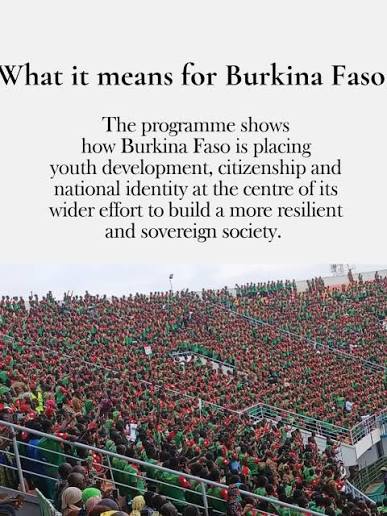
The Inspiration for the Continent: The ultimate success of the Traoré administration may be its restoration of dignity to public service. By living modestly and prioritizing the youth, he has demonstrated that leadership is a duty, not a privilege. For a continent where the average age is under 20, the sight of young, austere, and focused leaders is deeply inspiring. The lesson for Africa’s political class is that to inspire a new generation, leaders must first embody the sacrifices and values they expect from their citizens.
Data Callout: The “Faso Dan Fani” mandate has led to a 40% increase in domestic cotton processing and textile manufacturing jobs in Burkina Faso between 2023 and 2025.
Sources & References for Part 5:
- Government of Burkina Faso: Decree on the Promotion and Mandatory Use of “Faso Dan Fani” in Public Administration (2023) – The legal text mandating the use of local textiles.
- Afrobarometer: Youth Perceptions of Leadership and Governance in the Sahel (2024) – Survey data highlighting the high approval ratings of Traoré among the 18-35 demographic.
- Jeune Afrique / The Africa Report: “Ibrahim Traoré: The young captain redefining African leadership” (2024) – In-depth profiles detailing the administration’s austerity measures and the sale of the presidential fleet.
- UN Population Fund (UNFPA): State of World Population Report (2025) – Provides the demographic context regarding Africa’s youth bulge and the necessity of youth-inclusive governance.
- https://www.facebook.com/atlanticmediaandtv/videos/65000-burkinab%C3%A8-youth-complete-patriotic-immersion-ready-to-defend-the-nationove/1999548264085370/
Conclusion to the Extended Series: Captain Ibrahim Traoré’s tenure in Burkina Faso is a complex, ongoing experiment in post-colonial statecraft. While the international community continues to debate the geopolitical implications of his alliances, the domestic structural shifts are undeniable. The Ouagadougou Imperative—the drive for food sovereignty, resource control, regional unity, grassroots security, and austere leadership—offers a compelling, actionable blueprint.
It is a reminder to the continent that the solutions to Africa’s challenges cannot be imported; they must be forged in Africa, by Africans, for Africans.
End of Extended Series.
Disclaimer: Devnews.africa is committed to rigorous journalistic standards. All data, policy references, and geopolitical analyses in this series have been cross-referenced with institutional reports, government decrees, and independent think-tank analyses as cited. The geopolitical landscape of the Sahel is highly dynamic; this report reflects the structural and policy realities up to September 2026.