
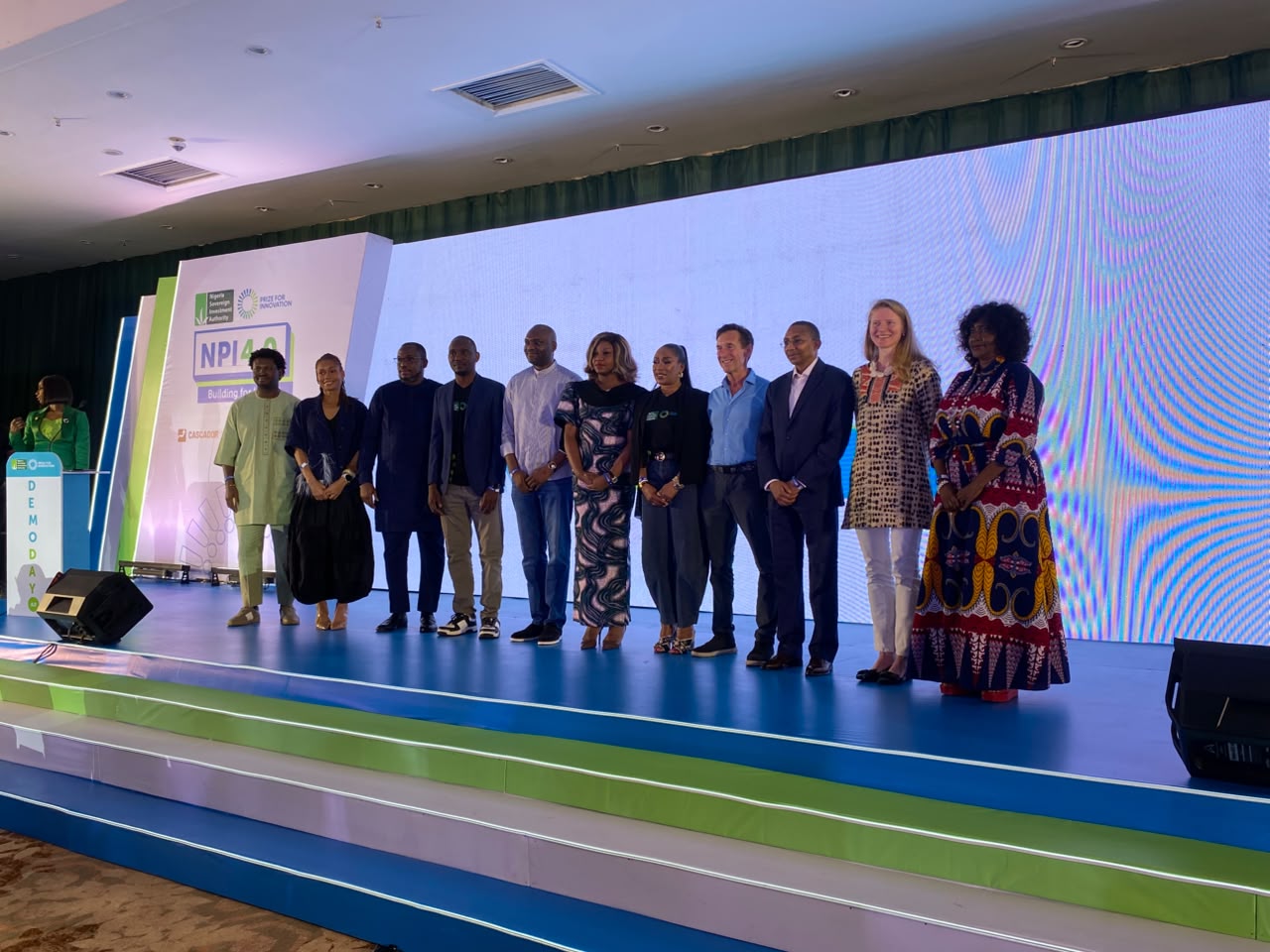
Come Again Foods has emerged as the overall winner of the fourth edition of the NSIA Prize for Innovation (NPI 4.0), receiving a $100,000 prize at the Demo Day held on Saturday, October 24, 2026, at the Ladi Kwali Hall, Abuja Continental Hotel, Abuja.
The Lagos-based company transforms Nigerian cassava into snacks, including its flagship cassava biscuit Tapioca. It beat 11 other finalists selected from more than 6,000 applications across healthcare, manufacturing, and climate and food security.
For students, fresh graduates, and early founders, the event was more than a prize ceremony. It was a snapshot of the problems Nigerians are already paying to solve and the kinds of businesses that can grow from them.
Come Again Foods did not win because cassava biscuits sound exciting. It won because the business already had traction.
The company says it sold one million sachets of its cassava biscuits last year and generated about N150 million in revenue. This year, it is projecting N360 million in sales. It also says it has more than 100 distributors across 22 states.
Founder Neli abogu said the $100,000 prize will support factory expansion, working capital, distributor growth, and marketing. The company also plans to launch cheddar popcorn.
For first-time founders, the lesson is simple: you do not need to be perfect before you start. You need to be coachable, consistent, and able to show real customer demand.
The Startups Worth Watching
The 12 finalists pitched businesses tackling healthcare access, local manufacturing, clean energy, food production, and waste.
In healthcare Plural Health is connecting hospitals, pharmacies, laboratories and patients on one digital network. The startup says it already works with more than 230 facilities and wants to make prescriptions, lab requests, and referrals move faster and more securely.
Fortics Healthcare is reviving closed private hospitals and connecting them into one network. It says it has served more than 48,000 patients across five units and plans to operate 30 hospitals by 2030.
Eight Medical is building an emergency platform that connects users to ambulances, hospitals, medical personnel, information, and emergency credit within 10 minutes. The company says it has completed more than 30,000 missions and works with more than 400 responders.
InstaRad, which finished third with $50,000, is tackling radiology delays. It says it has processed more than 500,000 reports and reduced reporting turnaround times from as long as 30 days to under 20 minutes.
In manufacturing, Ebees Green makes sustainable paper packaging and paper handles for food businesses. It says it has recorded nearly N200 million in sales and retained all of its early customers since 2019.
Sambal Enterprise uses solar powered processing hubs to turn crops such as soya beans into products including plant-based, lactose-free milk. It reported N45 million in revenue in 2025 and is targeting N850 million by 2030.
In climate and food security, Uwana Energy connects homes and businesses to solar vendors, installers and financiers. It says it has generated more than N1 billion in revenue over two and a half years and installed more than two megawatts of capacity.
Smartel Agritech builds hydroponic systems that allow people to grow vegetables without soil. It says its solar-powered systems can improve yields by five to eight times and has supported close to 2,000 farmers through a produce buyback model.
Protein kapital, the first runner-up with $70,000, uses Black Soldier Fly larvae to turn food waste into animal protein and organic fertiliser. It says it has generated $1.4 million in revenue and upcycled 5,000 tonnes of food waste.
Tryctor builds locally made mini tractors for smallholder farmers. Co-founder Tomiwa Ojutalayo said Nigeria has a shortage of about 250,000 tractors and that only one in every 1,000 smallholder farmers has access to mechanisation.
Evet Africa connects livestock farmers to veterinary services, farm inputs, and markets through USSD, WhatsApp, mobile apps, and physical veterinary centres. It says it has trained more than 50,000 farmers and created jobs for more than 1,000 veterinary extension agents.
What the Judges Were Saying
The judges repeatedly pushed founders on customers, pricing, distribution, margins, and scalability.
Lead judge and ReelFruit founder Affiong Williams told the finalists to focus on the people who will actually pay for their product.
David Delucia, founder of Cascador, told the entrepreneurs that scaling requires more than the skills that helped them start.
That is a warning for every founder: the hustle that gets your first customers may not be enough to run a larger company. Founders need stronger systems, better teams, financial discipline, and advisers who have scaled businesses before.
Other Winners
Protein kapital emerged first runner-up with $70,000, while InstaRad took third place with $50,000.
Uwana Energy and Eats Medical each received $15,000 as top-two impact-focused innovators. Ebees Green, Come Again Foods, and Sambal Enterprise received $5,000 each as Most Impactful Award winners.
Wema Bank also gave $4,000 awards to Tryctor, Smartel Agritech, and Eight Medical. Joint fourth-place recognition went to Eight Medical, Fortics, Plural Health, Ebees Green, Tryctor, Sambal Enterprise, Smartel Agritech, Evet Africa, and Uwana Energy.
What Young Entrepreneurs Should Do Next
• Pick a problem you understand. Food costs, healthcare delays, energy bills, packaging waste, farm productivity, and livestock losses are real problems with paying customers.
• Build proof before pitching. Track sales, customers, repeat purchases, costs, and distribution. Real numbers are more convincing than a polished idea.
• Learn investor language. Understand product-market fit, unit economics, customer acquisition cost, margins, and working capital.
• Apply for structured support early. Put the NSIA Prize for Innovation, Cascador, Founder Institute, Wema Bank innovation programmes, and similar opportunities on your radar.
• Use Nigeria’s local advantage. Cassava, food waste, healthcare gaps, energy costs, farms, and livestock are not just problems they can become businesses.
The biggest lesson from NPI 4.0 is not that one cassava snack company won $100,000. It is that Nigerian problems are becoming Nigerian business opportunities and the people who pay attention early may build the next Come Again Foods, InstaRad, Protein Capital, or Uwana Energy.