
Nigeria currently has no Ebola case being managed in the country, following the medical evacuation of the confirmed Ebola patient and her husband to Switzerland earlier today.
The patient, a 42-year-old woman, was confirmed with Ebola disease in the Federal Capital Territory (FCT) on 20 October 2026. She had travelled to Abuja from Uganda through Addis Ababa.
According to WHO Regional Director for Africa, Prof. Mohammed Janabi, the patient and her husband were evacuated because both are Swiss citizens. The patient was also clinically stable enough to be transferred after the Nigerian medical team successfully managed her through the acute phase of the illness.
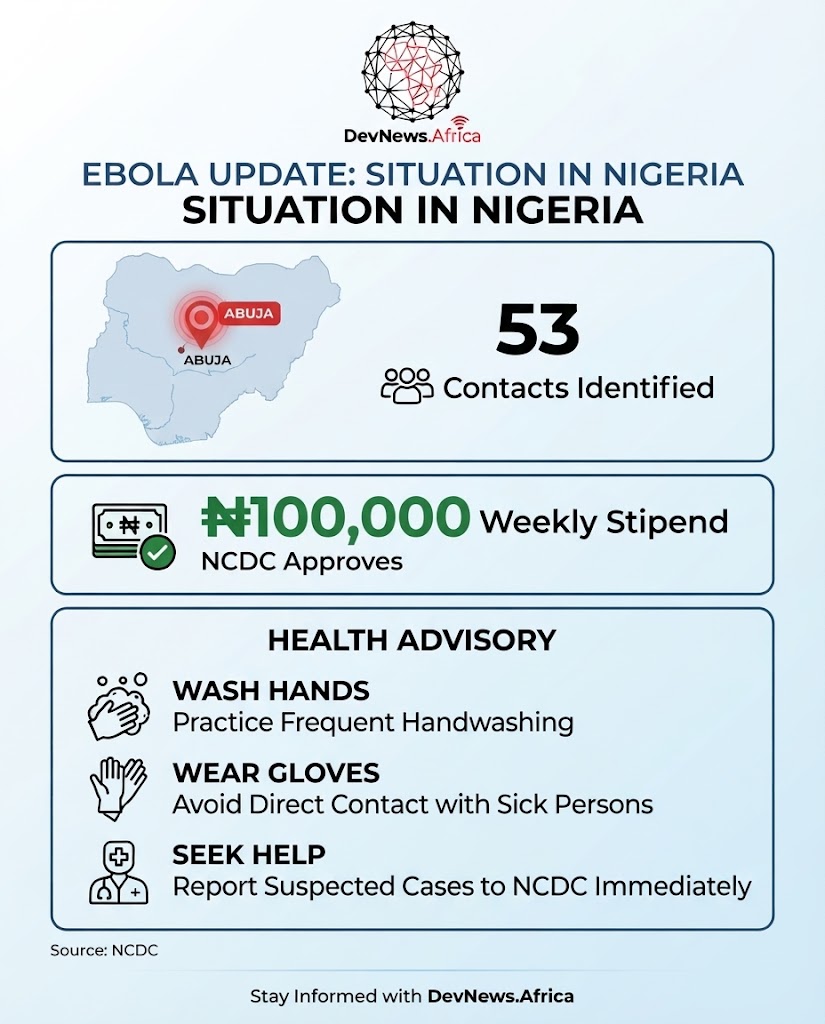
Before the evacuation, 53 contacts linked to the confirmed case had been identified. Nigeria will continue monitoring 52 contacts, while Switzerland will take responsibility for the patient’s continued medical care and the follow-up of contact number 53 her husband.
Although the confirmed patient is no longer in Nigeria, health authorities are maintaining surveillance and contact monitoring, so vigilance remains important.
NCDC Approves ₦100,000 Weekly Stipend for Ebola Contacts as 53 People Placed Under Watch
Meanwhile, The Nigeria Centre for Disease Control and Prevention (NCDC) has approved an emergency weekly payment of ₦100,000 for each person identified as a contact of the country’s confirmed Ebola case and placed under isolation or quarantine.
Director-General of the NCDC, Dr. Jide Idris made the announcement during a press briefing in Abuja on Sunday, 25 October 2026. He said the financial support was introduced after some contacts complained about the cost of feeding themselves and maintaining their families while complying with public health restrictions.
“We are paying for their accommodation, we are paying for their feeding. Some of them are asking for a stipend to maintain their families. We are providing ₦100,000 per person per week just to maintain their comfort and feeding, because they were complaining,” Dr. Idris stated.
He described the payment as an unplanned emergency measure that will be reviewed as the response continues. The agency is already covering accommodation and meals for those under monitoring.
Dr. Idris noted that 44 of the contacts are linked to the health facility where the patient was treated, while the remaining nine were identified through other interactions. All contacts will be monitored for 21 days after their last possible exposure.
The NCDC Director-General also called on state governments to prepare adequate funding and logistics for similar public health emergencies, stressing that the responsibility should not rest solely on the Federal Capital Territory.
A suspected Ebola case reported in Rivers State has tested negative.
Here’s what you should do
There is no need to panic, but everyone should remain alert. Continue practicing good hand hygiene and avoid contact with the blood or body fluids of anyone showing symptoms consistent with Ebola.
Anyone who may have had contact with the patient or develops concerning symptoms such as fever, vomiting, diarrhea severe weakness or body aches should contact health authorities immediately and follow their instructions. It is also important to rely on updates from the NCDC, Federal Ministry of Health and WHO, and avoid sharing unverified information that could cause unnecessary fear.
Stay tuned as we will be bringing you more verified information on the Ebola situation in Abuja and Nigeria as it unfolds.