
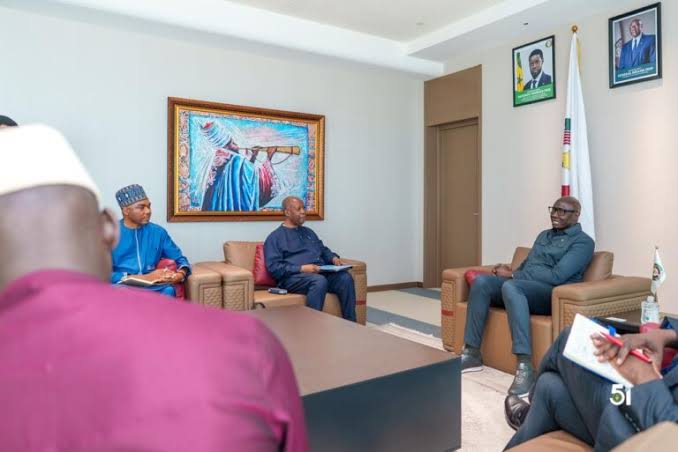
When a region moves from sending soldiers after a crisis to investing in jobs, early warnings, and community stability before one explodes, that changes who gets hired, funded, and taken seriously. That was the core message from ECOWAS at the African Union Peace and Security Council’s open session on 2 November 2026, held as the AU marked 20 years of its Post-Conflict Reconstruction and Development (PCRD) Policy.
ECOWAS’ Permanent Representative to the AU, Hon. Abdou Kolley, argued that West Africa has shifted from reactive military intervention toward a “preventative, development-led human security model.” In plain terms: peace is not simply the absence of gunfire; it is continuous investment in economic resilience, youth opportunity, and institutions that can respond before violence spreads.
Kolley pointed to two decades of peace infrastructure: stabilising political transitions in The Gambia and Guinea-Bissau, and supporting Disarmament, Demobilisation and Reintegration (DDR) programmes in Liberia. The point is that post-conflict recovery cannot stop at disarmament; it has to create livelihoods and reduce the vulnerabilities that armed groups exploit.
He also highlighted two regional tools:
• ECOWAS Standby Force: a regional mechanism intended to provide rapid stabilisation capacity.
• ECOWARN: ECOWAS’ early-warning and response network, designed to detect risks and trigger action before they escalate.
The current focus, he said, is structural: youth unemployment, cross-border resource conflicts, and the socio-economic conditions that extremist groups exploit. That matters because these are not abstract security issues they are labour-market, land-access, and local-governance issues.
The Two Gaps That Could Undo the Progress
Kolley was blunt about the weaknesses.
First, there is a response gap: early-warning systems may detect a problem quickly, but political decision making often does not move at the same speed. A warning is only useful if institutions act on it.
Second, there is a sovereign funding gap: African peace efforts remain too dependent on external partners. His proposed fix is to operationalise the ECOWAS Peace Fund and make fuller use of the AU Peace Fund so African-led solutions are financed by African institutions.
That funding question is the one young founders, NGOs, researchers, and policy professionals should watch. If regional peace funds become genuinely operational, they could become sources of grants, contracts, fellowships, and implementation partnerships not just lines in communiqués.
Why this matters
A student Peace and security careers increasingly need economics, data, climate, gender, and community-development skills not only international relations. Study conflict analysis alongside data skills, development finance, or public policy.
A fresh graduate Youth unemployment is being framed as a security risk, which puts youth employment programmes higher on the policy agenda. Target roles in ECOWAS, AU institutions, peacebuilding NGOs, development finance, research, and local governance.
An early-stage founder Stability reduces business risk: safer trade routes, more predictable local markets, and potential public-sector demand for monitoring, logistics, fintech, and skills-training solutions. Build solutions around youth employment, cross-border trade, community data, climate-resource conflict, or financial resilience.
A civil-society actor The AU’s revised PCRD framework includes youth inclusion, women, peace and security, human rights, transitional justice, and environmental sustainability. Push for community-led programmes, not only top-down security projects.
The AU’s Bigger Shift
The session formed part of PCRD Month under the theme “Twenty Years of Building and Sustaining Peace: From Policy to Action.” The AU adopted the original PCRD Policy in Banjul in 2006, and revised it in 2024; the revised policy includes nine pillars, among them political governance, security governance, socio-economic reconstruction, women, peace and security, youth inclusion, and environmental sustainability.
That language matters. It signals that the AU is treating reconstruction as more than rebuilding roads and holding elections. It includes who gets included in decisions, how young people access opportunity, how women participate in peace processes, and whether recovery protects people from future climate and resource shocks.
What to Demand Next
Kolley asked the AU Peace and Security Council to commit to three immediate actions:
• Harmonise the AU–ECOWAS relationship to reduce duplication and clarify who does what.
• Prioritise decentralised, community-owned peacebuilding, especially initiatives centred on women and youth.
• Maintain institutional solidarity to counter geopolitical fragmentation across West Africa.
For young Africans, the practical demand is simple: peace policy should be measured by whether it creates jobs, protects communities, funds local organisations, and responds quickly to early warnings. If the next 20 years of PCRD are judged only by meetings and frameworks, the region will have learned the wrong lesson.
ECOWAS Peace Fund operationalisation, AU Peace Fund financing, youth employment programmes, ECOWARN response performance, and opportunities from the AU PCRD Centre. Those are the signals that will show whether “permanent resilience” becomes real policy or remains a speech.