
While the world argued about trade wars, inflation, and geopolitical tension, West Africa grew at 4.8% in 2025; faster than the African average of 4.4%.
That’s not a fluke. That’s resilience.
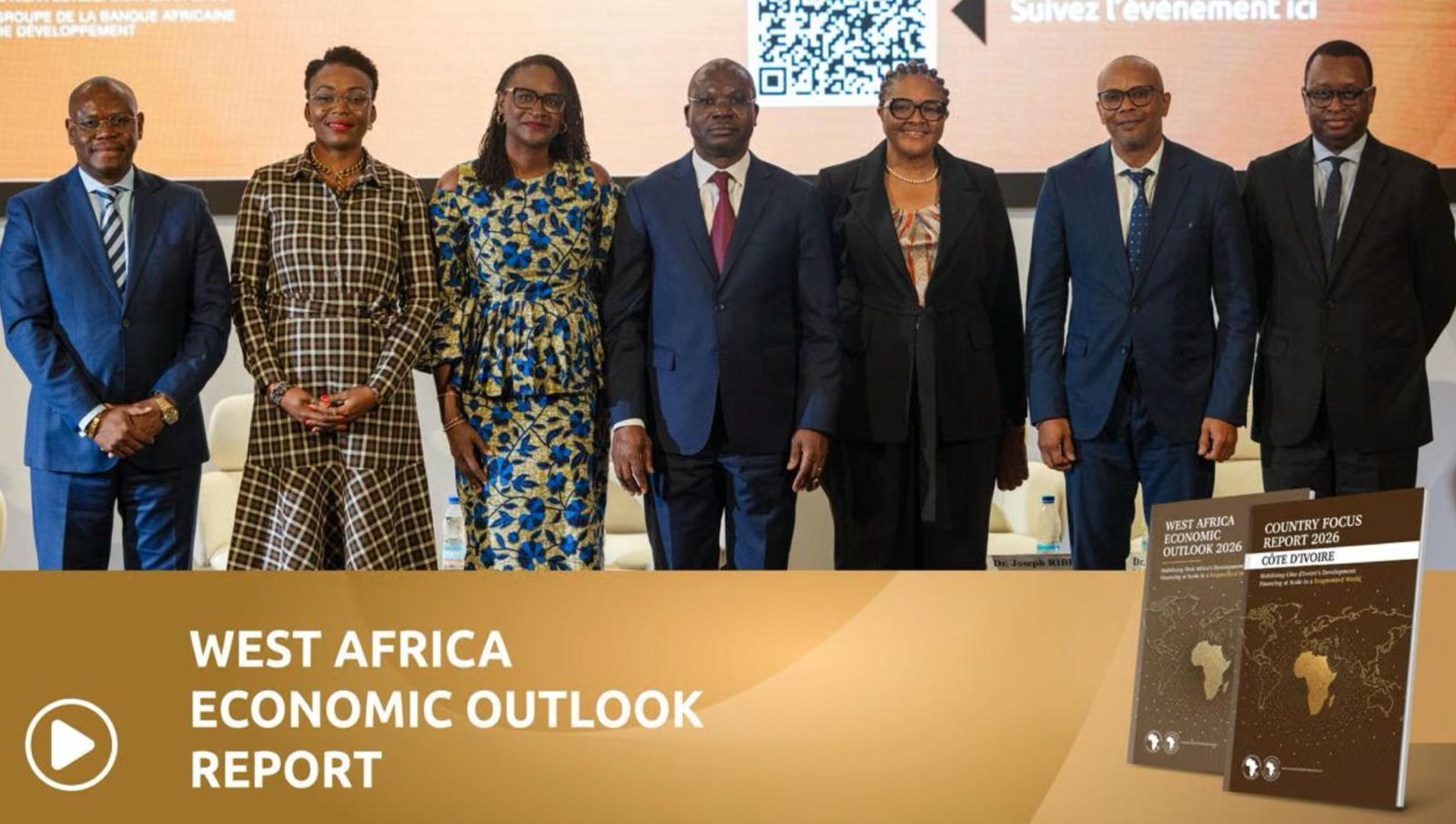
Two new reports from the African Development Bank: The West Africa Regional Economic Outlook and the Côte d’Ivoire Country Focus Report just dropped in Abidjan. They’re dense, data-heavy, and full of economic grammar.
So let’s translate. Here’s what actually matters, in plain English.
The Good News
The region is moving: Growth is projected at 4.6% in 2026, driven by private investment, infrastructure spending, and expansion in oil, gas, and mining.
Côte d’Ivoire is leading: As the largest economy in the WAEMU zone, it’s expected to grow 6.5% in 2025.
The money exists: West Africa could close its estimated $90-100 billion annual financing gap not by begging for aid, but by mobilizing its own resources.
The blueprint is clear: Broaden the tax base. Formalize the informal economy. Channel pension and insurance savings into long-term investments. Manage natural resource revenues better.
The Real Challenge (Its not what you might think)
Here’s the twist: The problem isn’t that West Africa lacks money. It’s that the money is fragmented, underutilized, or stuck in systems that don’t connect savings to projects.
The region’s average tax-to-GDP ratio? 9.9% over the past five years. The WAEMU benchmark? 20%.
That gap isn’t just a statistic. It’s the difference between a government that can fund schools, clinics,& roads and one that can’t.
And while Côte d’Ivoire aims for upper-middle-income status by 2030, that ambition won’t be met by growth alone. It requires structural transformation: industrialization, private-sector development, and expanded fiscal space.
Now Here’s How This Affects You.
Forget the macro numbers for a moment. Think about the person behind the statistic.
If you’re a young entrepreneur: A more formalized economy means easier access to credit, clearer regulations, and better protection for your business.
If you’re a job seeker: Structural transformation means more industries, more skills training, and more opportunities beyond the informal sector.
If you’re a student or researcher: These reports are data goldmines. Use them to inform your projects, advocacy, or policy recommendations.
If you’re just trying to understand where the continent is headed: This is your early-warning system. West Africa’s trajectory affects trade, migration, investment, and stability across the region.
Here’s what you should be looking out for:
- Tax reform: Will governments broaden the base without crushing small businesses? Will digital tools make compliance easier than evasion?
- Informal sector integration: Will policies recognize and support informal operators, or continue to marginalize them as “hard to tax”?
- Regional financial integration: Will the BRVM (West African Regional Stock Exchange) deepen? Will payment systems connect across borders? Will pension funds invest regionally?
- Côte d’Ivoire’s 2030 ambition: Will industrialization and private-sector reforms actually create jobs or just boost GDP on paper?
- Youth inclusion: Will young Africans be part of designing these reforms, or just subject to them?
Here are our final thoughts at DNA
Reports don’t create prosperity. People do.
But reports can clarify the path. And right now, the path for West Africa is clear: mobilize domestic resources, strengthen financial systems, and channel capital into transformative investments.
The truth here is simple: West Africa doesn’t need to wait for rescue. It needs to wire its own systems.
The growth is there. The capital is there. The blueprint is drawn.
Now it’s about who picks up the tools. And who ensures they serve the people they’re meant to serve.
West Africa is moving. The question is whether the momentum becomes transformation or just another statistic.
We will be watching.
We will be waiting.