
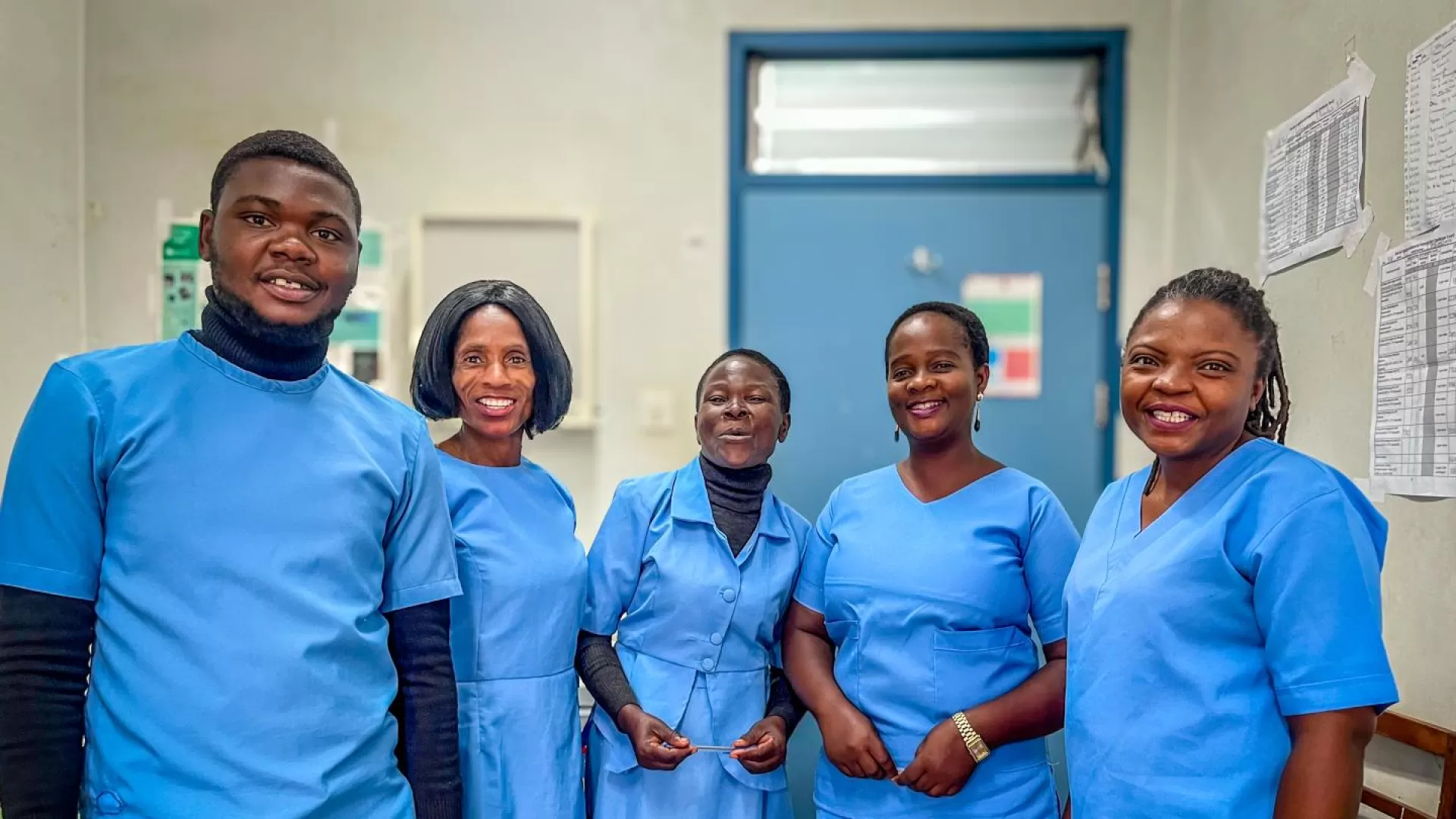
In a rural clinic in Malawi, patients wait for hours. Nurses work double shifts. Supplies run thin. The system is stretched past its breaking point.
At the same time, in Nairobi, a freshly qualified nursing graduate sits at home. She passed her exams. She completed her clinical rotations. She’s ready to work. But there are no vacancies. No budget for new posts. No clear pathway to employment. She watches her skills fade while the clinic down the road begs for staff.
This isn’t two different problems. It’s the same broken system.
And this week in Addis Ababa, African health ministers finally named it.
They endorsed the Africa Health Workforce Agenda 2026–2035, committing to plan, educate, employ, and retain 3 million additional health workers by 2035.
But here’s the twist that changes everything: Africa doesn’t just need more graduates. It needs to fix the pipeline between graduation and service.
THE NUMBERS THAT DON’T ADD UP
Let’s translate the macro data into plain English.
Africa currently has about 5.7 million health workers. That sounds like a lot. But it’s only 46% of what the continent actually needs.
Without decisive action, that gap widens to 6 million by 2035.
Yet right now, an estimated 1 million trained health professionals are unemployed. In several countries, more than half of newly qualified nurses, doctors, and midwives can’t secure jobs soon after graduation.
We’ve been treating the symptom (not enough workers) while ignoring the disease (nowhere to put them).
“You cannot fill a basket with a hole at the bottom.” — Swahili Proverb
For years, the strategy was simple: build more medical schools, graduate more professionals, celebrate the numbers. But if the health labor market is broken, producing more graduates just creates more frustrated talent. The new agenda shifts the focus. It’s no longer just about training. It’s about planning, employment, retention, and actually funding the posts that exist on paper but not in practice.
THE REAL SHIFT: FROM CLASSROOMS TO CAREERS
WHO’s Regional Director for Africa, Dr. Mohamed Yakub Janabi, put it sharply: “Educating health workers is only the beginning. We must also create the opportunities, the support and the conditions that enable them to serve, grow and thrive where they are needed most.”
That’s the pivot.
The agenda doesn’t just call for more lectures. It calls for:
- Workforce planning that matches reality, not wishful thinking
- Education aligned with actual job openings,
- Employment pathways that actually hire,
- Retention strategies that keep workers, instead of watching them leave for better pay, safer conditions, or overseas opportunities
And it demands cross-sector coordination. Health ministries can’t do this alone. Finance ministries must budget for posts. Education departments must adjust graduate intake. Labor and public service sectors must streamline hiring. When one ministry moves and the others stall, the whole system fractures.
Policies don’t treat patients. People do. And people need jobs, support, and systems that work.
THE ECONOMIC CASE (WHY THIS ISN’T JUST “HEALTHCARE”)
Let’s talk money. Because this isn’t just a health priority. It’s an economic multiplier.
Closing Africa’s health workforce gap requires an additional investment of roughly $4 to $6 per person, per year. That’s less than a mobile data bundle in most cities.
But the return? Every dollar invested generates up to $10 in economic returns and roughly 30 times that in broader social benefits.
Translation: Healthier populations. Fewer sick days. Higher productivity. Stronger local economies. More children in school because parents aren’t dying from preventable diseases. More women in the workforce because maternal care actually works.
This isn’t a charity line item. It’s compound interest for national development.
“When you plant a tree, you don’t just get shade. You get fruit, timber, and soil that holds.” — West African Proverb
Investing in health workers doesn’t just save lives. It stabilizes economies.
In Summary,
The 2035 agenda is a roadmap. But a roadmap doesn’t drive the car.
Success won’t be measured by signed documents, launched initiatives, or conference photo ops. It’ll be measured by how many graduates get posted within six months of qualifying. How many rural clinics finally have a full team. How many patients stop waiting and start receiving care.
The truth here is simple: You cannot build a healthy continent on a foundation of unemployed professionals and understaffed clinics.
The workers are ready. The evidence is clear. The economic case is undeniable.
Now it’s about whether governments will fund the posts, align the systems, and stop treating health workforce planning as an afterthought.
Africa doesn’t need more medical schools. It needs functional labor markets. It needs budgets that match promises. It needs systems that place, support, and retain the people who keep us alive.
The deadline is 2035. The clock started ticking the moment the ministers signed.
Now let’s watch who actually hires.