
The African Development Bank just gathered the continent’s financial heavyweights in Abidjan. Here’s what they agreed to and why it matters for anyone under 30 who’s ever wondered why “development” feels so far away.
Let’s start with a number that should make you stop scrolling: $400 billion.
That’s how much money Africa needs, every single year, to fund the roads, schools, hospitals, and startups that actually change lives.
Now here’s the twist: Africa isn’t broke. The continent sits on roughly $4 trillion in savings.
So why does it feel like there’s never enough money for the things that matter?
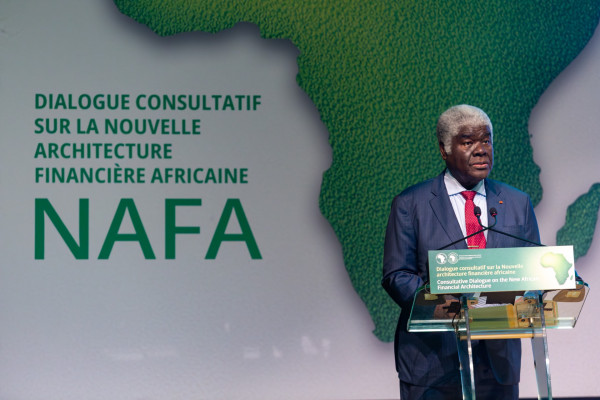
Last week, in Abidjan, a room full of Africa’s most powerful financial minds tried to answer that question. Central bank governors. Sovereign wealth fund managers. Private equity players. Development bankers. They spent a day in nine working groups—called “Labs,” because everything needs a brand now—brainstorming how to build a new financial system for the continent.
The result? An 11-point agreement called the “Abidjan Consensus.”
The goal? Stop relying so heavily on foreign aid and start unlocking Africa’s own money to fund Africa’s future.
The man leading the charge, African Development Bank President Dr. Sidi Ould Tah, put it bluntly: “The current architecture of financing Africa’s development is inadequate and not fit for purpose.”
In plain English? The system is broken. Not because Africa lacks capital. But because the capital Africa has isn’t flowing to where it’s needed most.
So what is NAFAD, exactly?
NAFAD stands for the New African Financial Architecture for Development.
Try saying that three times fast.
Here’s the simple version: It’s a blueprint for rerouting Africa’s money. Instead of savings sitting idle in accounts or flowing out of the continent, NAFAD wants to channel that capital into productive investments—infrastructure, small businesses, green energy, tech hubs—right here at home.
Think of it like this: Africa has a massive engine ($4 trillion in savings). But for decades, we’ve been trying to drive the car using someone else’s fuel (concessional loans, foreign aid). NAFAD is about switching to our own tank.
As Professor Carlos Lopes, the Guinea-Bissau economist, noted at the meeting: “Concessional finance has played a role… But we have also learned its limits. It was never designed to finance transformation at scale.”
In other words: Aid can keep the lights on. But only African capital can build the power plant.
Why should you care?
Because this isn’t about balance sheets. It’s about opportunity.
If NAFAD works:
- A young entrepreneur in Lagos gets a loan from a local fund, not a foreign bank with impossible terms.
- A solar startup in Nairobi scales because African pension funds invest in green energy.
- A road in rural Malawi gets built because regional development banks coordinate financing—cutting transport costs, lowering food prices, creating jobs.
If it doesn’t?
- The $400 billion gap stays a gap.
- Young talent keeps leaving, chasing opportunity elsewhere.
- The cycle of “study, plan, pilot, pause” continues.
The catch (because there’s always a catch)
Agreements don’t move money. People do.
The Abidjan Consensus is a roadmap. But maps don’t build roads.
The real test starts now:
- Will African governments reform policies to make investing easier?
- Will local financial institutions have the capacity to deploy capital at scale?
- Will young entrepreneurs and civil society have a seat at the table—or just be mentioned in the press release?
And perhaps most importantly: Will the annual reviews promised in the Consensus actually track progress, or just produce more reports?
Dr. Ould Tah called the moment “historic.” History, however, is written in outcomes—not opening ceremonies.
The DevNews.Africa take?
Here’s the unvarnished truth:
Africa doesn’t have a money problem. It has a movement problem.
$4 trillion in savings is a weapon. But a weapon is only as good as the hand that wields it. NAFAD is an attempt to aim that weapon at the right targets: job creation, infrastructure, innovation, inclusion.
If the financial architects in Abidjan can turn consensus into action, this could be the moment Africa stopped asking for permission to develop—and started funding its own future.
If they can’t? It’ll be another well-worded document in a long line of well-worded documents.
#AfDB #NAFAD #AfricaFinance #Development #GenZ #AbidjanConsensus #DevNewsAfrica #NoJargon #RealTalk #MoneyMoves