
Burkina Faso produces cotton. Lots of it. The 2025-2026 campaign yielded 314,293 tonnes of cotton seed, up from 294,507 tonnes the previous year. The 2026-2027 target is 532,000 tonnes. But for decades, most of that value has left the country. Exported as raw fiber. Processed elsewhere. Sold back as expensive clothing.
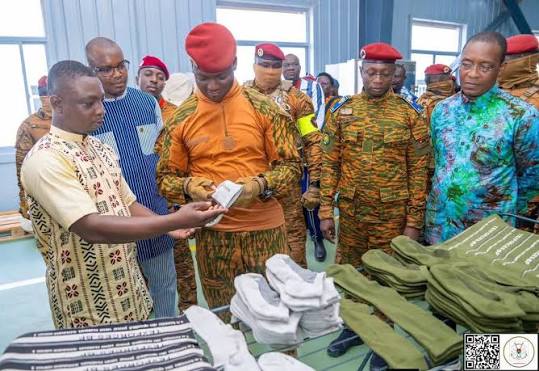
That is changing. On September 9, 2026, Burkina Faso inaugurated TEXFORCES-BF, a massive textile complex in Bobo-Dioulasso. This is not a pilot project. It is an industrial statement.
The 30-hectare facility integrates the entire textile value chain: spinning, weaving, knitting, dyeing, finishing, and garment production. Current capacity includes 20 million meters of fabric, 5 to 6 million knit units, and several million finished garments annually. The expansion plan targets 50,000 tonnes of cotton processing per year, with weaving capacity reaching 100 million meters and over 20 million finished pieces.
Captain Ibrahim Traoré presided over the inauguration. The project was conceived in March 2024, with the first stone laid in April 2024. That speed matters. In two years, Burkina Faso moved from concept to industrial operation. The initial capital of 17 billion CFA francs was increased to finance expanded capacity.
TEXFORCES-BF was born from a practical need: clothing for Burkina Faso’s defense forces and the Volunteers for the Defense of the Homeland. But its ambition extends far beyond military uniforms. The complex targets civilian markets, professional clothing, and eventually regional and international exports.
This is the value addition bet. When cotton leaves Burkina Faso as raw fiber, the country captures a fraction of its ultimate value. When it leaves as finished garments, the value stays home. Jobs are created. Skills are developed. Foreign exchange is earned. Industrial capacity is built.
The challenge is execution. Can TEXFORCES-BF produce at competitive quality and price? Can it access regional markets? Can it train and retain skilled workers? Can it navigate power supply constraints and input costs?
Burkina Faso has the cotton. It has the political will. It has the facility. Now it needs the market. If TEXFORCES-BF succeeds, it becomes a model for African industrialization. If it fails, it becomes another cautionary tale about ambitious projects and harsh realities.
The looms are spinning. The stakes are clear.