The chocolate bill is about to get less predictable, Cocoa is slipping back into shortage territory. Broker StoneX now expects the world to produce 64,000 metric tons less cocoa than it consumes in the 2026/27 season a sharp reversal from last season’s record 494,000ton surplus.
For students, young professionals, and founders, this is not just “chocolate is expensive.” It is a live lesson in how weather, commodities, and supply chains turn into higher prices, fewer product options, and new business opportunities.
StoneX cut its global cocoa supply forecast by 90,000 tons and now expects world supply to fall 9.6%. The main cause is a strong El Niño weather pattern hitting cocoa-growing regions unevenly.
The damage is concentrated in the places that matter most :
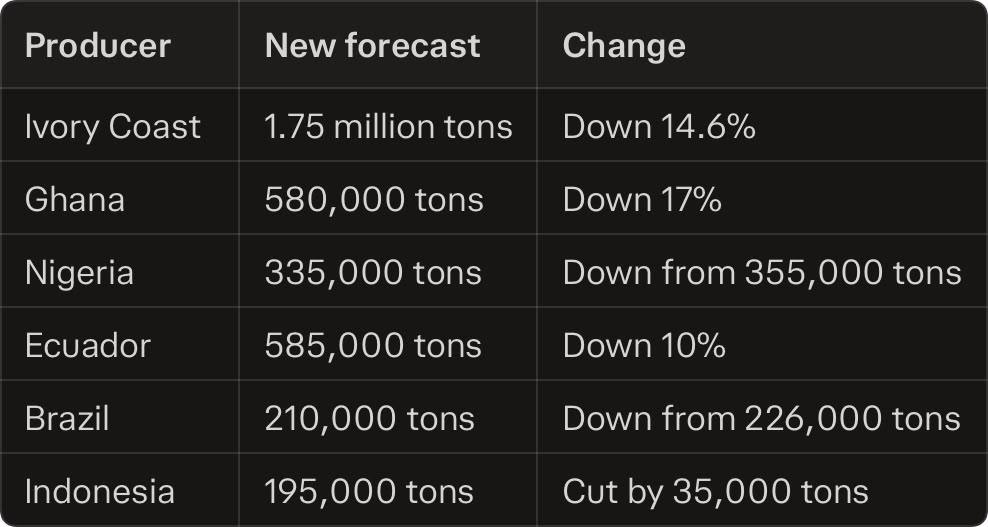
Ivory Coast and Ghana are the heart of global cocoa production, so weak harvests there affect chocolate makers everywhere. Excess rain damaged Ivory Coast’s fruit set, while Ecuador faced flooding and disease risk, Brazil dealt with drought and fires, and Indonesia saw September rainfall more than 70% below average.
A deficit means demand is outrunning supply. StoneX expects global stocks to fall to about 1.77 million tons, leaving a stocks-to-use ratio near 37% a smaller cushion if the next harvest disappoints.
But do not expect supermarket prices to move in real time. Chocolate companies often buy cocoa months ahead through contracts and hold inventories, so today’s shelf prices can still reflect beans purchased when costs were higher. That lag is why chocolate prices rose 15.5% even while cocoa prices had fallen from their peak.
Manufacturers are already responding by raising prices, shrinking pack sizes, reducing cocoa content, reformulating products, and trying to become less dependent on cocoa. For you, that may show up as a smaller bar, more “chocolate flavoured” products, fewer discounts, or premium chocolate becoming a deliberate treat rather than an everyday purchase.
The opportunity hiding in the shortage
This is bad news for chocolate lovers, but it creates openings for people building careers or businesses around food, agriculture, logistics, climate, and consumer products.
• Agtech and climate adaptation: Farmers and exporters need better weather forecasting, disease monitoring, irrigation, and yield-prediction tools. El Niño is not a one-off; climate volatility is becoming a recurring business risk.
• Supply-chain and procurement roles: Companies need people who can manage hedging, supplier risk, inventory, and sourcing across unstable markets.
• Cocoa-producing markets: Nigeria, Ghana, and Ivory Coast are not just victims of the story. If global buyers want more resilient supply, investment in farmer productivity, post-harvest handling, traceability, and local processing becomes more valuable.
• Small food brands: If you sell baked goods, beverages, desserts, or snacks, cocoa is now a cost line you must actively manage not assume will stay stable.
Study how commodity prices move through supply chains. Learn basic Excel modelling, futures and hedging concepts, agricultural supply chains, and climate-risk analysis. Follow cocoa prices alongside retailer pricing and company earnings calls. If you are building a business: Do not price your product as if cocoa costs are stable. Build a simple sensitivity model: if cocoa rises 10%, 25%, or 50%, what happens to your margin? Consider supplier contracts, smaller portions, recipe flexibility, or a premium product line before you are forced into panic decisions.
If you are an investor or job seeker: Track three things over the next few months: West African rainfall and harvest reports, cocoa futures, and chocolate-company commentary on pricing and volumes. The market is already volatile: cocoa futures recently traded around $5,670 per ton as traders priced in supply risk.
If you want to demand better: Ask brands and policymakers not only “why is chocolate expensive?” but “what are you doing to make cocoa farming more resilient?” The shortage is a weather shock, but the deeper issue is a supply system exposed to climate risk and volatile farmer incomes.
The number is 64,000 tons. The real story is that the safety margin has disappeared and the people who understand that early will be better positioned to work in, invest in, or build the businesses that fix it.