
Regulators, bankers, and sustainability experts just gathered in Lagos to figure out how to make “ESG” actually mean something. Here’s what that means for your portfolio, your planet, and your future.
“What gets measured gets managed.” — Peter Drucker
Let’s start with a question: How do you know if a company is actually “green”—or just really good at marketing?
If you’re an investor in Lagos, Nairobi, or Accra, that question just got harder to dodge. And last week, a room full of Africa’s sharpest financial minds tried to answer it.
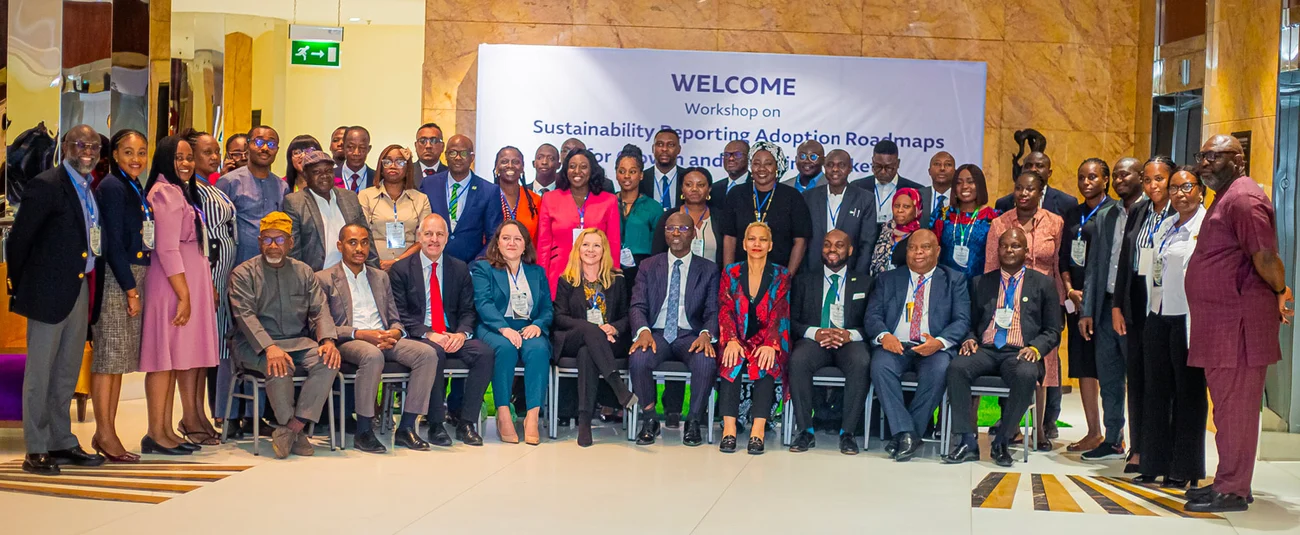
Between April 8–9, in Lagos, sustainability experts and securities regulators from across Africa and the Middle East gathered for a workshop organized by the International Organization of Securities Commissions (IOSCO) and the World Bank.
The goal? Help African countries build their own roadmaps for sustainability reporting—using a global standard, but adapted for local reality.
The African Development Bank used the moment to spotlight its Africa ESG Hub: a practical toolkit designed to help regulators and companies adopt International Sustainability Standards Board (ISSB) rules without losing their African context.
In plain English? They’re trying to make “sustainability” less of a buzzword and more of a balance sheet item.
What actually happened (Plain English Edition)
The workshop wasn’t about writing new rules. It was about making existing ones work.
The IFRS Foundation’s Roadmap Development Tool—a kind of GPS for sustainability reporting—was the star of the show. Countries can use it to figure out: What data do we need? Who collects it? How do we make sure it’s credible?
The Africa ESG Hub, meanwhile, isn’t a policy. It’s a support system. It offers templates, training, and tailored guidance so that a small agribusiness in Kaduna isn’t drowning in the same reporting requirements as a multinational in Johannesburg.
And yes, the Hub just released its first Africa ESG Disclosure Survey—available in English and French—so you can actually see where countries stand.
“In God we trust. All others must bring data.” — W. Edwards Deming
Why you should care
Because “sustainability” isn’t just a corporate slide anymore. It’s a currency.
If this works:
- A young entrepreneur in Kumasi can access green financing because their business can prove its environmental impact—using a standard investors actually trust.
- A pension fund in Dar es Salaam can confidently invest in companies that aren’t just profitable, but responsible.
- A regulator in Freetown can spot greenwashing before it hurts retail investors.
If it doesn’t?
- “ESG” remains a checkbox exercise—expensive for companies, confusing for investors, useless for the planet.
- African markets stay on the sidelines as global capital flows toward regions with clearer, comparable data.
- The next generation inherits a system that talks about sustainability but can’t measure it.
“The best time to plant a tree was 20 years ago. The second best time is now.” — Chinese Proverb
The Catch (Because there’s always one)
Standards don’t enforce themselves. People do.
Having a roadmap is one thing. Walking it is another. Will governments allocate the budget and talent to actually implement these disclosures? Will companies—especially smaller ones—have the capacity to comply without being crushed by bureaucracy? And critically: Will the data be accessible to the public, or locked behind paywalls and technical jargon?
Dr. Timi Agama, Director General of Nigeria’s SEC, noted that the African Development Bank’s input helped show “how continental initiatives such as the Africa ESG Hub can support jurisdictions in navigating evolving sustainability reporting frameworks.”
Translation: The tools exist. The will is forming. The hard part—execution—starts now.
The bigger picture: Africa’s seat at the global table
This Lagos workshop wasn’t an isolated event. It’s part of a global IOSCO initiative that’s already convened regulators across Asia-Pacific, Latin America, and Europe.
Why does that matter? Because capital is global. If African companies want to attract investment from London, New York, or Singapore, they need to speak the same language of transparency.
But—and this is critical—the goal isn’t to copy-paste European rules onto African soil. It’s to adapt global standards to African realities. As Dr. Ndidi Nnoli-Edozien of the IFRS Foundation’s ISSB put it: The collaboration aims to build “capacity and expertise across Africa in implementing ISSB Standards as a foundation for high quality, decision-useful, comparable and proportionate sustainability disclosures.”
In other words: Not less rigor. More relevance.
“Transparency is the currency of trust.” — Anonymous
The DevNews.Africa takeaway
Here’s the unvarnished truth:
Money follows clarity. Investors don’t fear risk—they fear uncertainty. And for too long, African markets have been seen as “hard to read” on sustainability.
The Africa ESG Hub isn’t a silver bullet. But it’s a signal: Africa isn’t waiting for permission to define its own green future. It’s building the tools to measure it, report it, and monetize it—on its own terms.
But remember: A standard is only as strong as the system that upholds it. If regulators enforce, if companies comply, if civil society watches, this could be the moment African capital markets stopped being seen as “emerging” and started being seen as essential.
If not? It’ll be another well-intentioned framework that looked great on paper.
“The truth will set you free, but first it will make you miserable.” — James A. Garfield
Read the full news here: https://www.afdb.org/en/news-and-events/press-releases/african-development-bank-calls-faster-adoption-global-sustainability-reporting-standards-across-africas-capital-markets