
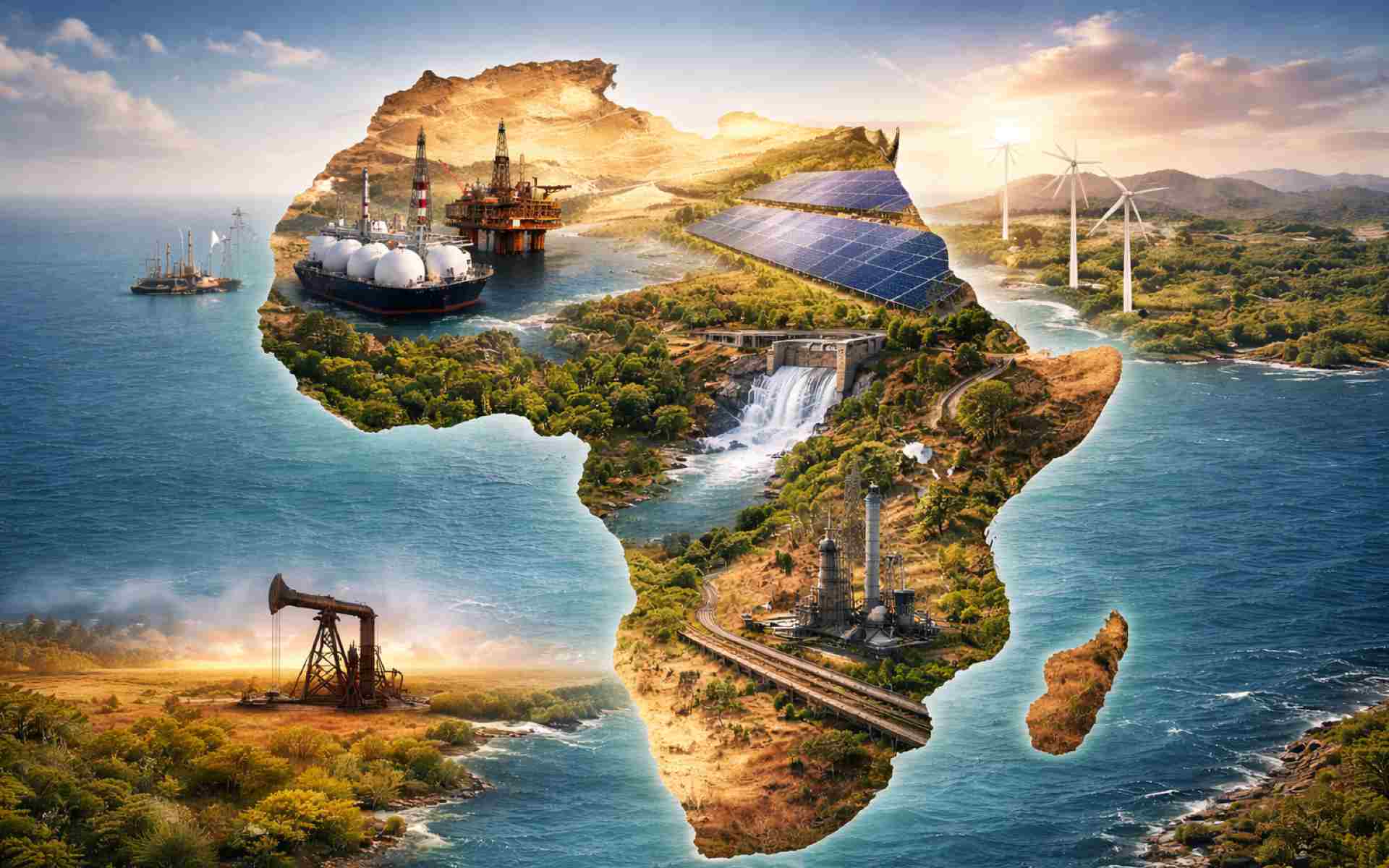
The African Court is about to rule on whether climate rules should limit Africa’s right to use oil and gas. Here’s what that actually means—for the student studying by phone light and the entrepreneur waiting on power.
“A river that forgets its source will run dry.” — Yoruba Proverb
Let’s start with a number that should make you pause: 600 million.
That’s how many people in Africa still live without electricity.
Now here’s the twist: Africa contributes less than 4% of global greenhouse gas emissions. Yet the continent is being asked to limit investment in the very resources—oil and gas—that powered the industrial rise of the economies now leading the call for climate action.
Last month, the African Court on Human and Peoples’ Rights began considering an advisory proceeding that could reshape how climate obligations intersect with development rights for African nations. The question isn’t abstract. It’s urgent: Can Africa industrialize, lift its people out of energy poverty, and grow its economies—while meeting global climate goals?
In plain English? This isn’t just a legal case. It’s a referendum on who gets to decide Africa’s future.
THE OFFICIAL STORY VS. THE MACHINERY
The African Energy Chamber, led by NJ Ayuk, has filed an amicus curiae brief arguing that climate policy must account for Africa’s development needs. Their position: restricting investment in oil and gas could constrain industrialization for economies that have contributed minimally to global emissions.
Greenpeace Africa has also submitted a brief, framing climate destruction as a human rights violation under the African Charter. Their position: states have binding obligations to prevent harm and protect vulnerable communities.
Both agree on one thing: the status quo isn’t working.
Africa needs an estimated $143 billion annually to implement its climate commitments under the Paris Agreement. It currently receives about $30 billion. That gap isn’t a budget line. It’s a barrier.
“The frog that jumps without looking where it lands will end up in the chicken’s mouth.” — West African Proverb
Africa has jumped—signing treaties, launching green initiatives, embracing renewable potential. But if the landing zone is a financial system that charges premium rates for its participation, the fall is predictable.
THE HUMAN STAKES
Forget the legal jargon for a moment. Think about the person behind the statistic.
A student in rural Kenya wants to study after dark. But the solar lamp broke, and there’s no money to replace it. She studies by phone flashlight—draining the battery she needs for class submissions.
A nurse in northern Nigeria can’t store vaccines because the clinic’s generator runs on expensive diesel, and the budget ran out months ago.
A young entrepreneur in Accra has a business plan for a food processing startup. But without reliable, affordable power, the equipment won’t run, the cold chain won’t hold, and the investors won’t commit.
These aren’t edge cases. They’re the daily reality for hundreds of millions.
The African Court’s advisory opinion could influence whether policies prioritize universal energy access alongside emissions reduction—or treat them as competing goals.
“When the moon is shining, the cripple becomes hungry for a walk.” — Zulu Proverb
The moon is shining. The question is whether the path will be cleared.
WHAT WE’RE WATCHING
- The Court’s framing: Will the advisory opinion center human rights, development equity, or climate urgency—and how will it balance them?
- Climate finance flows: Will the $143 billion gap narrow, or will pledges remain disconnected from disbursements?
- Resource governance: If African states proceed with oil and gas development, what safeguards will protect communities and ecosystems?
- Youth inclusion: Will young Africans—those most affected by both climate impacts and energy poverty—have meaningful input into the policies that shape their future?
- Regional coordination: Will African states present a unified position in global climate negotiations, or will fragmented interests weaken collective leverage?
Our Thoughts…
This isn’t a story about oil versus environment. It’s a story about agency.
Africa doesn’t lack ideas. It lacks leverage.
The African Court’s advisory opinion won’t build a power plant. It won’t lower interest rates. It won’t transfer technology. But it could clarify the legal and moral framework within which those decisions are made.
“The truth is like a lion; you don’t have to defend it. Let it loose; it will defend itself.” — African Proverb
The truth here is simple: Climate responsibility cannot mean denying Africa the policy space to industrialize. But industrialization cannot mean ignoring the climate crisis.
The path forward isn’t either/or. It’s both/and: clean energy that powers growth, infrastructure that enables trade, technology that creates jobs—and financing that reflects belief in African potential, not skepticism about African risk.
The Court is listening. Now let’s watch what happens when the gavel falls.
“If you want to go fast, go alone. If you want to go far, go together.” — Pan-African Proverb
Africa is ready to go far. The question is whether the world is ready to walk with it—not as benefactor, but as partner.
📎