
Let’s be honest: if “empowering women entrepreneurs” was a PowerPoint slide, we’d all be rich by now.
But actual money? That’s different.
So when the African Development Bank approved a $61 million package specifically for women-led businesses in Nigeria last week, it wasn’t just another press release. It was a signal.
Here’s what actually happened, minus the institutional fog:
The Breakdown (In Human Terms)
The AfDB didn’t just write a cheque and hope for the best. They structured this thing like someone who’s been burned before:
- $50 million in a gender-focused line of credit → money that banks can lend to women-owned businesses without sweating the risk quite so much
- $8 million in concessional financing → cheaper money for agri-food SMEs, because farming shouldn’t require a second mortgage just to get started
- $3 million in grant funding → no-repayment cash to build capacity, train lenders, and actually measure whether this works
Total: $61 million. Target: women-led businesses, especially in agriculture. Delivery method: the Development Bank of Nigeria’s existing network, because building new pipes is expensive and slow.
And here’s the kicker: 95% of this money is earmarked specifically for women-owned or women-led enterprises. Not “we hope some finds its way to women.” Not “gender mainstreaming.” Ninety-five percent.
That’s not an accident. That’s intention.
Why This Matters (Beyond the Obvious)
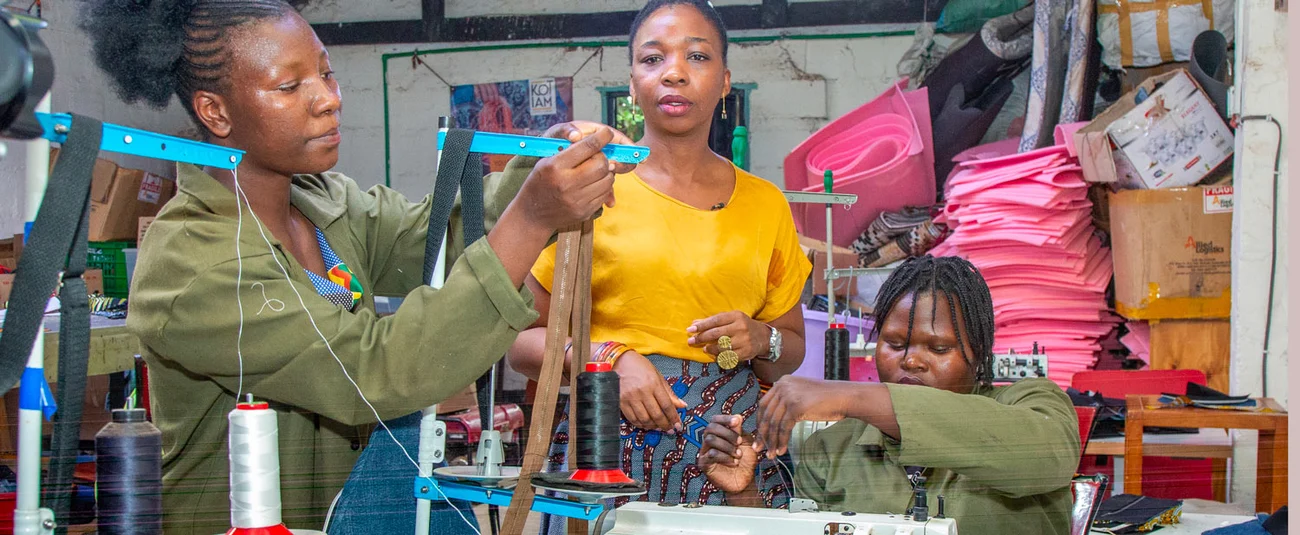
Nigeria has no shortage of brilliant women with business ideas. What it has a shortage of is access to capital that doesn’t require collateral they don’t have, interest rates that assume they’ll fail, or loan officers who quietly prefer lending to men.
This package tries to fix that. Not by magic. By design.
Think about who benefits:
- The woman in Kaduna growing organic peppers but losing half her harvest because she can’t afford cold storage
- The entrepreneur in Enugu building solar dryers for cassava but stuck at pilot scale because banks won’t lend to “unproven” tech
- The agri-processor in Oyo who can fulfill a big order—if she can just get working capital for the next 90 days
These aren’t hypotheticals. They’re the people this money is supposed to reach.
Dr. Abdul Kamara, the AfDB’s Nigeria Country Director, put it plainly: “Women entrepreneurs are one of Nigeria’s greatest economic assets and one of its most underleveraged.”
Translation: we’ve been sitting on a goldmine and calling it a hobby.
The Part Where We Stay Real
Money is necessary. It is not sufficient.
Here’s what this package doesn’t automatically solve:
🔹 The “last mile” problem: Getting funds from DBN to a rural women’s cooperative isn’t just a wire transfer. It requires trust, verification, and local partners who understand the context.
🔹 Beyond credit: Loans help. But women entrepreneurs also need mentorship, market access, digital tools, and policy environments that don’t actively work against them.
🔹 Measurement that matters: Will success be counted in loans disbursed—or in businesses that survive, scale, and hire?
🔹 The men question: Involving men as allies, not obstacles, is critical. Inclusive growth isn’t a zero-sum game, but it does require shifting power, not just adding programmes.
“A single hand cannot tie a bundle.” — Swahili Proverb
This package is one hand. It needs others to make the knot hold.
What to Watch
- Who actually gets the money: Will it reach rural women farmers, or cluster in urban centres where due diligence is easier?
- Interest rates and terms: “Affordable credit” means different things to a Lagos fintech and a Shea butter producer in Niger State.
- Capacity building: Is the $3 million grant enough to train lenders, support borrowers, and track outcomes meaningfully?
- Spillover effects: Will this change how Nigerian banks view women-led businesses long after this package is deployed?
- Replication: If this works, will similar structures appear in Ghana, Kenya, Côte d’Ivoire—or will every country reinvent the wheel?
Our take at DNA
$61 million won’t fix everything. But it might fix enough.
Nigeria’s women entrepreneurs don’t need sympathy. They need capital, confidence, and a system that stops treating them as “high risk” simply because they’re women.
This package is a step. Not the destination. Not the solution. A step.
And sometimes, a step in the right direction is exactly what changes the trajectory.
“The sun does not forget a village just because it is small.” — West African Proverb
Neither should development finance.