They call it a highway. I call it a wager.
“If you want to go fast, go alone. If you want to go far, go together.” — Pan-African Proverb
One thousand and twenty-eight kilometers. Five borders. Five finance ministries. One blueprint that looks clean on paper and will be anything but clean on the ground.
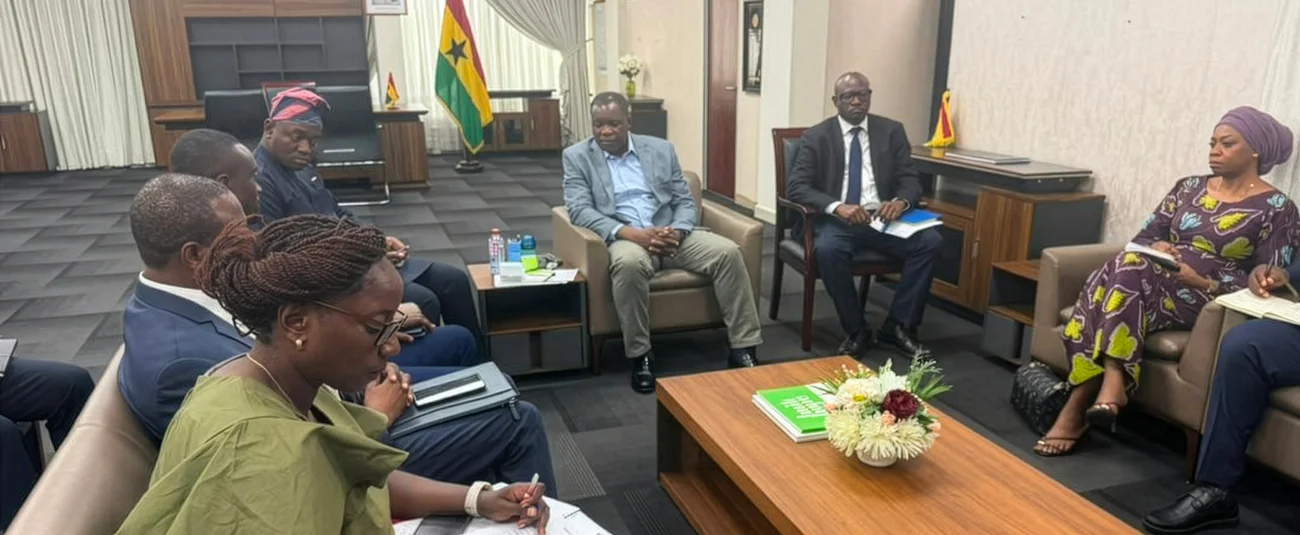
Last week, a joint African Development Bank and ECOWAS delegation finished a two-week tour across Côte d’Ivoire, Ghana, Togo, Benin, and Nigeria. They met ministers. They reviewed feasibility studies. They talked about viability gaps, land acquisition, and supranational governance. They called it a field mission. In the real world, it’s a fundraise.
The official narrative is familiar: regional integration, trade corridors, AfCFTA enablers, six-lane connectivity. The ground truth is simpler. This is a test. Can five countries with different political cycles, procurement rules, and budget realities align long enough to pour concrete that outlasts their terms?
They’ve already spent $25 million in technical assistance. The studies are done. The treaty is signed. A new Corridor Management Authority exists on paper to keep the highway functioning as one asset, not five disconnected segments. Now comes the part blueprints can’t solve: capital.
THE MACHINERY UNDERNEATH
Roads are engineering problems. Corridors are political ones.
You can survey a route in months. You can clear land, compensate owners, and pour asphalt in years. But aligning five governments, a regional development bank, private lenders, and toll operators requires a different kind of leverage. ECOWAS Director Chris Appiah didn’t mince words: delays in securing viability gap funding and land costs could sink the project’s momentum. Translation: if the money doesn’t match the map, the map stays on the wall.
Private capital is already at the table—Ecobank and other institutional players were part of the mission. That’s necessary. Public budgets won’t cover billions in transnational infrastructure. But private money wants predictability. It wants risk mitigated. It wants toll structures that guarantee returns without pricing out the traders who actually keep West African commerce alive.
The Corridor Management Authority is supposed to bridge this. Supranational bodies work only when member states empower them, fund them, and resist the temptation to override them when domestic politics get loud. Treaties don’t enforce themselves. Institutions do.
THE HUMAN STAKES
Forget regional integration for a moment. Think about the trader in Kumasi who loses 30% of her perishables to border delays. Think about the driver in Lomé who pays multiple informal tolls just to cross into Benin. Think about the young graduate in Abidjan who watches job postings in Lagos and wonders if the distance is a visa problem or a road problem.
This highway won’t fix all of it. But if it’s built right, maintained honestly, and governed transparently, it turns friction into flow. It makes trade cheaper, labor more mobile, and supply chains less brittle. It turns the African Continental Free Trade Area from a headline into a habit.
If it’s built poorly, it becomes another monument to good intentions. Toll plazas that bleed small operators. Maintenance budgets that vanish when political priorities shift. A supranational authority that exists on letterhead but starves in practice.
“The frog that jumps without looking where it lands will end up in the chicken’s mouth.” — West African Proverb
We’re past the jumping phase. Now it’s about where they land.
WHAT WE’RE WATCHING
- Financing structure: Is this debt, equity, public-private partnership, or a mix? Who bears the risk if toll revenue underperforms?
- Land acquisition: Are consultations genuine or procedural? Are compensation frameworks transparent, or will disputes stall construction?
- Maintenance model: Who pays when the asphalt cracks in year three? Is there a ring-fenced fund, or will it fall to overstretched national budgets?
- Local contractor access: Will West African firms win meaningful bids, or will foreign consortia take the prime contracts while locals get subcontracted crumbs?
- Toll affordability: Will pricing tiers protect small-scale traders, or will the highway become a premium lane for corporate logistics only?
THE CLOSE
Infrastructure doesn’t create prosperity. It removes friction so prosperity can move.
The Abidjan-Lagos corridor is no longer a concept. It’s a commitment waiting for capital, coordination, and courage. The African Development Bank has done the prep work. The governments have signed the treaty. The authority exists. Now the real work begins: turning alignment into asphalt, promises into pavement, and regional ambition into daily reality.
We won’t be watching the ribbon-cuttings. We’ll be watching the maintenance logs, the toll receipts, the land dispute resolutions, and the contractor payrolls. That’s where the truth lives.
“The truth is like a lion; you don’t have to defend it. Let it loose; it will defend itself.” — African Proverb
The blueprint is drawn. The ground is waiting. Let’s see if the follow-through matches the fanfare.