
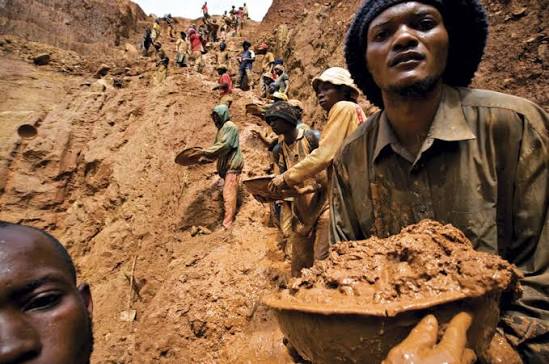
Let us talk mining in Africa. For decades, the global mining playbook in Africa followed the same pattern. Extract the copper, the cobalt, the lithium, the gold. Ship it overseas. Process it elsewhere. Sell it back at a premium. The continent provided the raw materials. The rest of the world kept the margins. Now, a new framework is being proposed. Chinese President Xi Jinping recently outlined a four-point proposition for China-Africa mining cooperation. The Chinese Ambassador to Nigeria, Yu Dunhai, expanded on it, framing it as a shift toward sovereignty, mutual benefit, high-value processing, and open competition. But proposals are just paper until they hit the ground. The real question is whether this framework will change how communities experience mining, or whether it will just rebrand extraction.
“A river that forgets its source will run dry.” — Yoruba Proverb
Africa is done being a source for other people’s factories. It is time to build the factories.
THE FOUR POINTS TRANSLATED
Strip away the diplomatic framing. Here is what the proposition actually means for policy and practice.
Point 1: African resources belong to Africa. This is about sovereignty. It means Dakar, Abuja, or Lusaka sets the rules, not foreign capitals. It means decision-making power, licensing authority, and revenue tracking stay local. It is a direct rejection of the historical model where external powers dictated extraction terms while African governments collected minimal royalties.
Point 2: Mutual benefit and shared interests. This is where theory meets practice. It means localized operations, skills training, community contributions, and job creation instead of fly-in, fly-out labor models. It means Chinese enterprises operating in Nigeria are expected to transfer green technologies, hire locally, and reinvest in community infrastructure rather than treating projects as temporary extraction sites.
Point 3: High-quality development and value addition. Stop exporting raw ore. Start building processing plants, battery components, and industrial chains on the continent. The ambassador explicitly called for aligning mining cooperation with Nigeria’s industrial agenda to push projects into deep processing and high-value-added segments. This is the exact shift needed to turn a resource curse into a manufacturing base.
Point 4: Fair and open cooperation. Keep geopolitics out of the pit. Mining contracts should be awarded on transparent terms, not used as bargaining chips in global power struggles. The proposition welcomes all genuine partners while rejecting attempts to politicize African resource issues. Stability and predictability attract long-term capital. Volatility and proxy games attract short-term extractors.
“Well done is better than well said.” — African Proverb
COMPLIANCE VS. REALITY
The ambassador emphasized strict compliance with Nigerian laws, zero tolerance for illegal mining, and support for governance reforms. That is exactly what citizens need to hear. But compliance requires verification. We need public dashboards tracking local employment percentages, environmental remediation funds, and tax revenues. We need independent audits of joint ventures. We need communities to have a real seat at the table, not just a photo op at the groundbreaking.
When mining companies operate lawfully, they pay taxes, hire locally, and fund schools and clinics. When they cut corners, they pollute water sources, depress local wages, and leave behind ecological debt. The difference is not in the press release. It is in the enforcement. African governments must strengthen regulatory capacity, mandate transparent local content quotas, and ensure that every mining license comes with binding community development agreements.
“The truth is like a lion; you don’t have to defend it. Let it loose; it will defend itself.” — African Proverb
The truth here is simple. Resources are not destiny. Policy is.
OUR TAKE AT DNA
Will Africa’s minerals finally serve Africans? The answer depends on what happens after the handshake. The four-point proposition sounds promising, but the proof will be in the permits signed, the processing plants built, the jobs created, and the communities protected.
“If you want to go fast, go alone. If you want to go far, go together.” — Pan-African Proverb
Africa does not need gatekeepers. It needs architects. The blueprint for local processing, skills transfer, and transparent governance is on the table. The capital is moving. The question is whether we will study the mechanics, build the skills, and step into the rooms where these deals are structured. Or whether we will leave the future to people who do not share our horizon.
The ground is rich. The framework is drawn. Now let us watch who actually reads the fine print.