
Starting May 1, 53 African countries can export to China without paying import taxes. Here’s what that actually means—for the chili farmer in Rwanda, the graphite worker in Mozambique, and anyone tired of “South-South cooperation” sounding like a slogan.
“If you want to go fast, go alone. If you want to go far, go together.” — Pan-African Proverb
Let’s start with a number that should make you pause: 53.
That’s how many African countries now have zero-tariff access to the Chinese market.
Now here’s the twist: This isn’t charity. It’s strategy. And strategy, when done right, creates opportunity.
Starting May 1, 2026, China’s zero-tariff policy takes full effect for African nations with which it has diplomatic relations. No import taxes. No hidden fees. Just direct access to the world’s second-largest economy.
In plain English? A farmer in Kayonza can now sell dried chili to Shanghai without a 10-15% tax eating into their profit. A graphite processor in Mozambique can export value-added minerals without being penalized for not shipping raw ore. A young entrepreneur in Accra can pitch African specialty products to Chinese buyers without the price disadvantage of tariffs.
This isn’t abstract trade policy. It’s a shift in leverage.
THE OFFICIAL STORY VS. THE MACHINERY
The official narrative is familiar: dismantling trade barriers, deepening cooperation, advancing modernization through South-South partnership.
The machinery underneath is more interesting.
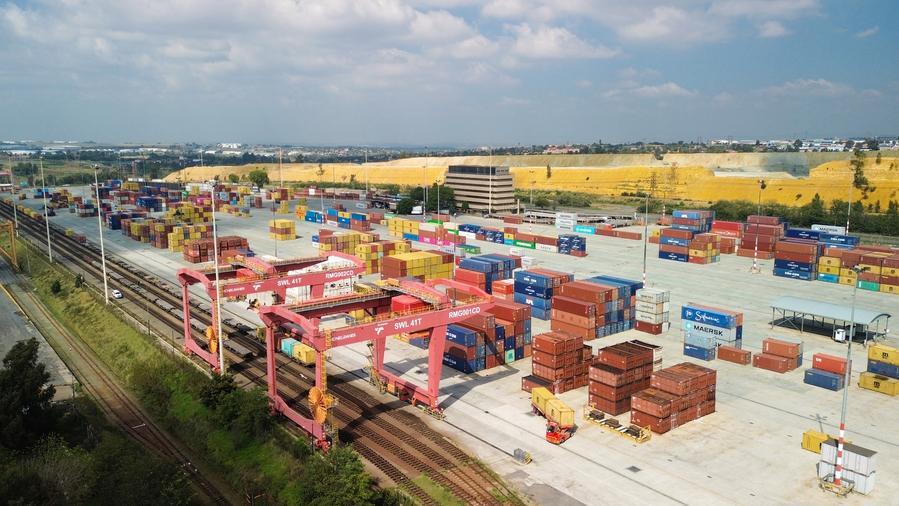
China isn’t just opening its market. It’s building infrastructure to move goods: “green channels” for faster customs clearance, platforms like the China International Import Expo to connect African sellers with Chinese buyers, and technical support to help African producers meet quality standards.
In Rwanda, Fisher Global—a local agribusiness—has scaled chili cultivation from 15 hectares in 2022 to 300 hectares today. They now employ 31 permanent staff and up to 600 casual workers. Exports to China grew from one container in 2022 to around 10 in 2023, with a target of 1,000 metric tons annually.
For 28-year-old farmer Emmanuel Bihoyiki, chili farming tripled his income. He bought land for himself and his parents.
In Mozambique, a Chinese-funded graphite processing plant aims for 200,000 tonnes of annual output—shifting the country from raw material exports to value-added production. At the Wanbao rice farm, yields jumped from 1-2 tonnes per hectare to 5-7 tonnes, with land-use efficiency up tenfold.
“Well done is better than well said.” — African Proverb
But here’s what the press release won’t tell you: zero tariffs don’t automatically mean zero barriers.
THE HUMAN STAKES
Forget the macro numbers for a moment. Think about the person behind the statistic.
A young woman in Kayonza harvests chili peppers under the Rwandan sun. Under the old system, her crop competed with subsidized producers from other regions, and tariffs made her product less competitive in China. Now, her organic, pesticide-free chili has a clearer path to market.
A technician in Niassa Province operates machinery at the new graphite plant. His job didn’t exist two years ago. It exists now because value-added processing is being incentivized—not just raw extraction.
A digital marketer in Lagos manages social media for an African brand targeting Chinese consumers. Her role exists because trade is becoming a two-way conversation, not a one-way pipeline.
China-Africa trade grew 17.7% year-on-year in 2025, reaching $348 billion. Africa’s exports to China exceeded $123 billion.
These aren’t just figures. They’re livelihoods.
“When the moon is shining, the cripple becomes hungry for a walk.” — Zulu Proverb
The moon is shining. The question is whether the path will be cleared—or just mapped.
THE DEVNEWS.AFRICA TAKE
Trade policy doesn’t create prosperity. It removes friction so prosperity can move.
China’s zero-tariff policy isn’t a gift. It’s a gamble. A bet that deeper economic integration will create mutual benefit—and that African producers can compete in the world’s most demanding markets.
For young Africans, the opportunity is real. But opportunity without preparation is just potential.
“The truth is like a lion; you don’t have to defend it. Let it loose; it will defend itself.” — African Proverb
The truth here is simple: tariffs are just one barrier. Language, logistics, quality standards, payment systems, and cultural fluency are others.
Zero tariffs open the door. Walking through it requires strategy, support, and stamina.
If African entrepreneurs, policymakers, and development partners align around capacity building, digital infrastructure, and fair value chains, this policy could accelerate industrialization, job creation, and regional integration.
If they don’t? It’ll be another well-intentioned framework that benefits the already-advantaged while leaving others behind.
“A single broomstick cannot sweep the compound.” — Yoruba Proverb
No single policy can transform an economy. But the right policy, in the right hands, at the right moment, can change the trajectory.
The zero-tariff door is open. Now let’s watch who walks through—and who gets to build the road beyond.
Source: https://www.xinhuanet.com/english/20260501/china-africa-zero-tariff-policy/