
Imagine your phone battery dies in two hours. You don’t immediately buy a bigger battery. You check the charging cable. You check the power bank. You check the port. More often than not, the problem isn’t capacity. It’s connection.
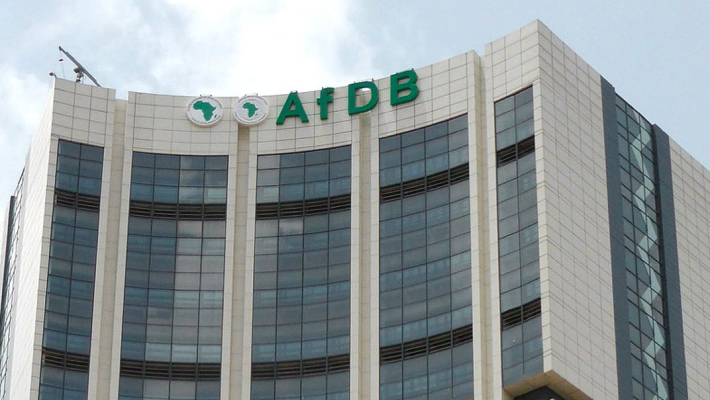
Africa’s revenue challenge works the exact same way. The African Development Bank says the continent could unlock an extra $469 billion every year – without raising a single tax rate. That number isn’t a prediction. It’s a diagnosis. And it points to a truth that gets buried under policy jargon: Africa doesn’t have a money shortage. It has a systems shortage.
The Trust Gap Nobody Talks About
When officials say “we need to improve tax compliance,” what they’re really saying is: “People aren’t paying because they don’t trust where the money goes.”
Think about it. You’ve seen how motivation dies when effort doesn’t match outcome. You study for a test, but the grading rubric is unclear. You join a team project, but credit gets hoarded. You stop trying. Not because you’re lazy. Because the feedback loop is broken.
That’s exactly what happens with public revenue. When citizens pay taxes but still sit in traffic on unmaintained roads, when clinics run out of basic medicine, when schools lack textbooks or power, when children cant go to school because of insecurity and banditry, paying taxes starts to feel less like civic duty and more like throwing cash into a black hole. The AfDB’s chief economist, Prof. Kevin Urama, named it plainly: weak collection isn’t just an administrative failure. It’s a trust failure. Fix the loop – show people exactly what their contributions build and compliance follows naturally.
The Fix (No New Taxes Required)
So how do you unlock nearly half a trillion dollars without asking families or small businesses to pay more? You stop relying on paper trails, manual ledgers, and systems that leak cash through inefficiency, overlap, or plain old opacity.
You digitize. You make paying easier than dodging. You train revenue officers properly and protect them from political interference. You link collection to visible results. The AfDB is even rolling out a Public Service Delivery Index – basically a report card for governments. If you collect revenue, you show the work. No more vague promises. Just clear cause and effect.
This isn’t revolutionary. It’s foundational. And that’s exactly why it works. Systems don’t need to be flashy to be effective. They just need to be consistent.
The Quiet Move: $125 Million for ATIDI
While the revenue story was making headlines, the AfDB quietly dropped another piece of the puzzle: a $125 million equity investment in ATIDI, Africa’s trade and investment insurance agency.
If that sounds like corporate jargon, here’s what it actually means in human terms: trading across African borders is risky. What if a buyer defaults? What if a currency swings? What if political tension freezes a shipment? ATIDI steps in to cover those risks. It’s an umbrella for businesses. With stronger backing, more young exporters, agro-processors, and tech founders can trade regionally without gambling their entire savings on one unpredictable deal.
It’s not charity. It’s confidence-building. And confidence is what turns small ventures into scaling industries.
The Bigger Picture: Sovereignty, Not Dependency
Strip away the acronyms and the boardroom language, and this is really a story about who gets to decide Africa’s future.
For decades, the continent’s development playbook has leaned heavily on foreign loans, donor grants, and external rescue plans. That model kept lights on, but it also kept decision-making off the continent. The current push to fix tax systems, digitize collections, back trade insurance, and mobilize domestic savings is a recalibration. It’s no longer about how much Africa can borrow. It’s about how much Africa can capture, protect, and reinvest.
The $469 billion isn’t a hidden treasure waiting to be discovered. It’s value already being generated, currently slipping through cracks that can be sealed. The tools exist. The blueprint is clear. What’s left is execution. And execution requires leaders who treat transparency as non-negotiable, institutions that measure results over rhetoric, and citizens who hold the line on accountability.
What This Means for us at DNA
We are old enough to know that slogans don’t build roads. Systems do. You’ve seen how broken feedback loops kill momentum – in school, in sports, in community projects. The same logic applies here. Africa doesn’t need to raise taxes to grow. It needs to build trust, close the leaks, and wire the systems so revenue actually fuels development.
The AfDB’s numbers and investments are just scaffolding. The real work happens when governments stop treating opacity as normal, when citizens demand clear receipts for public spending, and when young people step into the spaces where policy meets practice. Whether you study economics, law, tech, agriculture, or the arts, the future you inherit will be shaped by how well these systems function.
The money is already here. The question isn’t how to get more. It’s how to keep what we earn. And that’s a lesson worth mastering long before graduation.