
Let me tell you a story about gratitude because history always repeats itself.
Between 1948 and 1994, South Africa’s liberation movement didn’t survive because of good intentions. It survived because other African nations put their necks on the line.
Tanzania and Zambia hosted ANC training camps and paid for it with military raids and economic sabotage. Nigeria chaired the UN Special Committee Against Apartheid and funded scholarships for South African exiles through salary deductions from its own civil servants. Liberia and Kenya issued passports to dissidents so they could travel the world and campaign for freedom.
Nelson Mandela himself carried a Liberian passport.
“A river that forgets its source will run dry.” – Yoruba Proverb
Fast forward to 2026. The source is being repaid with hostility.
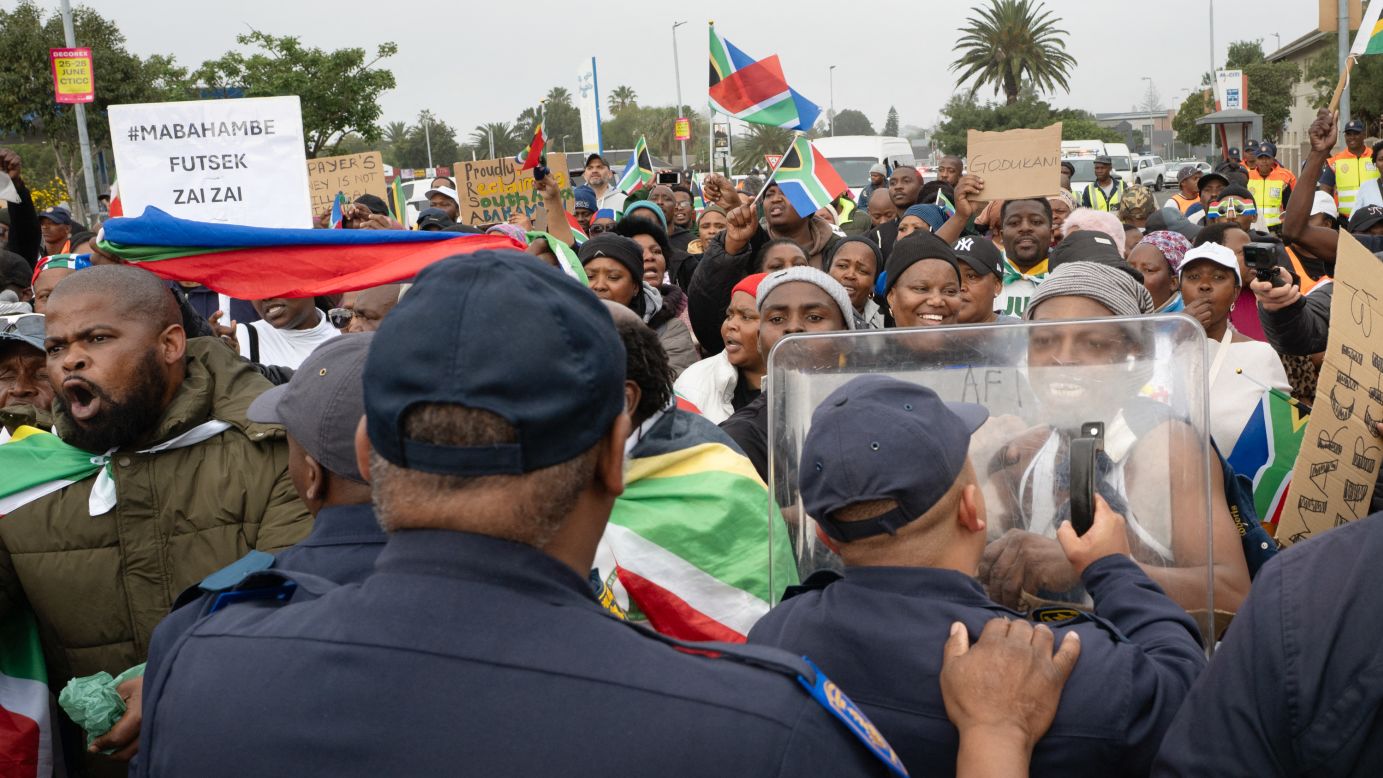
South Africa – now positioning itself as a continental leader, an AU heavyweight, a champion of the African Continental Free Trade Area, is expelling, intimidating, and scapegoating the very people whose nations once sheltered its freedom fighters.
And here’s the part that should make you stop scrolling: this isn’t just a moral failure. It’s an economic one. And the math is brutal.
THE HARD NUMBERS
Let’s strip the diplomacy and look at the ledger.
Trade is slipping. In May 2026, South Africa recorded its first trade deficit in 16 months: R1.8 billion ($100+ million). Exports dropped 5.7% in a single month. Analysts tie this directly to regional backlash over xenophobic policies.
The Nigerian imbalance. In Q1 2026, Nigeria exported ₦887 billion worth of goods to South Africa but imported only ₦155 billion. That’s not a partnership. That’s a one-way street. And when tensions flare, South African multinationals like MTN, Shoprite, and Multichoice become targets for consumer boycotts across West Africa. ShopRite has already closed shop in Nigeria.
The informal trade freeze. In Johannesburg alone, cross-border informal trade in textiles, clothing, and consumer goods is worth roughly $1 billion annually. Police crackdowns and citizen-led intimidation don’t just “restore order.” They freeze a cash flow that keeps South African wholesalers afloat and supplies basic goods to Zimbabwe, Mozambique, and beyond.
The remittance penalty. South Africa is Africa’s largest sender of cross-border remittances. Yet transaction costs for sending $200 average 7-14%—far above the UN’s 3% target. That “fee” isn’t just a line item. Its food, school fees, and medicine subtracted from families in Lesotho, Gambia, and Liberia.
“Well done is better than well said.” – African Proverb
Promises don’t pay bills. Trade does. And trade requires trust.
THE AfCFTA CONTRADICTION (WANTING MARKETS, REJECTING PEOPLE)
The African Continental Free Trade Area rests on a simple premise: goods, services, and people move more freely across borders. That’s how you build a $3.4 trillion continental market.
But South Africa’s stance sends a different signal: “We want access to your markets to sell our cars, our electronics, our retail brands. But we don’t want your people crossing our borders to work, trade, or live.”
That’s not integration. That’s extraction.
And it’s not lost on other African capitals. When a country positions itself as a continental leader while practicing exclusion at home, its moral authority to broker peace, lead negotiations, or shape policy evaporates.
“When elephants fight, it is the grass that suffers.” – Swahili Proverb
In this story, the elephants are geopolitics and protectionism. The grass is every young African trying to build a future across borders.
HISTORY’S WARNING (WE’VE SEEN THIS MOVIE BEFORE)
This isn’t the first time an African nation has tried to expel its way to prosperity.
Ghana, 1969: The Aliens Compliance Order expelled an estimated 140,000-500,000 foreigners, mostly Nigerians. Result? The cocoa sector collapsed. Retail markets fractured. The economy didn’t recover; it regressed.
Nigeria, 1983: Facing a post-oil-boom crash, Nigeria expelled over one million West African migrants under the slogan “Ghana Must Go.” Result? Decades of regional mistrust. No economic rescue. Just a cautionary tale.
South Africa is repeating the cycle: scapegoating immigrants for structural failures; unemployment, load-shedding, service delivery – instead of fixing the systems that actually produce those outcomes.
“The frog that jumps without looking where it lands will end up in the chicken’s mouth.” – West African Proverb
Expulsions feel like action. But action without strategy is just noise.
Here’s what we will be watching
- Diplomatic isolation: Will South Africa’s bid for a permanent UN Security Council seat survive continued criticism over xenophobia? Will AU partners quietly sideline Pretoria in peace negotiations?
- Corporate vulnerability: How will South African multinationals hedge against retaliatory boycotts? Will they lobby for policy change – or quietly relocate regional headquarters?
- Informal economy resilience: Will cross-border traders adapt to new routes and networks, or will the $1 billion informal pipeline permanently shrink?
- Remittance reform: Will South Africa reduce transaction costs to meet the UN’s 3% target, or will hyper-regulation continue to penalize migrant workers?
- Youth mobilization: Will young Africans; digital natives, pan-Africanists, entrepreneurs – organize across borders to demand policy change, or will fragmentation deepen?
THE DNA TAKE
Gratitude isn’t just a feeling. It’s a strategy.
South Africa’s liberation was a continental project. Its prosperity cannot be a national one.
The data is clear: xenophobia shrinks markets, spikes transaction costs, triggers retaliation, and stalls the very integration that could create the jobs, growth, and stability that anti-immigrant rhetoric promises.
“The truth is like a lion; you don’t have to defend it. Let it loose; it will defend itself.” – African Proverb
The truth here is simple: You cannot build a unified Africa on a foundation of exclusion. You cannot lead a continent while practicing ghettoization at home. You cannot demand open markets while closing borders.
History has warned us. Economics has priced it. The human cost is being paid daily.
The question isn’t whether South Africa can expel its way to prosperity. It’s whether Africa will allow a single nation’s inward turn to derail a continental project decades in the making.
“If you want to go fast, go alone. If you want to go far, go together.” – Pan-African Proverb
Africa’s choice is clear. The ledger is open. Now let’s watch who writes the next chapter.
Sources:
- South African Revenue Service trade data (May 2026) ;
- National Bureau of Statistics Nigeria Q1 2026 trade reports
- FinMark Trust remittance assessments ;
- ISS Africa & The Africa Report analysis on xenophobia’s economic impact historical documentation of Frontline States’ support for ANC.