
Let’s start with the stat for the day: 33%.
That’s the current rate of stunting (children too short for their age due to chronic malnutrition) in Western and Central Africa.
It’s down from 40% in 2000. Progress, yes. But at this pace, the region will miss the 2030 global target by a wide margin.
Now here’s the twist no one talks about: stunting isn’t just a health statistic. It’s a ceiling.
A child who is stunted doesn’t just grow up shorter. They grow up with a brain that didn’t get the nutrients it needed to wire itself fully. They learn slower. They earn less. They break the cycle of poverty less often.
The money spent fixing that later in remedial education, in lost productivity, in healthcare, is far more than the money needed to prevent it in the first place.
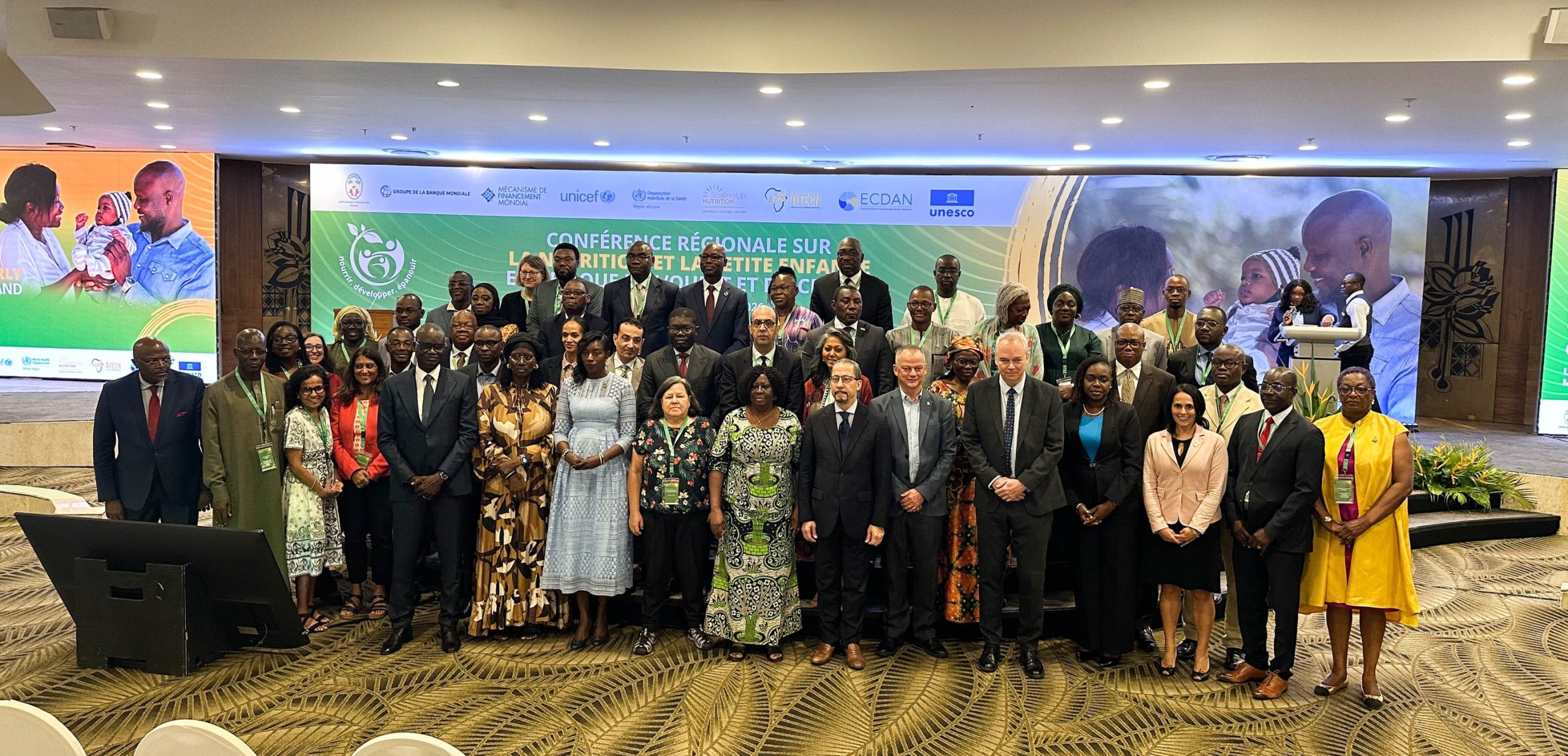
Last week in Lome, Togo, ministers, development partners, and civil society leaders gathered to talk about this. Not in abstract terms. In urgent ones.
“A river that forgets its source will run dry.” – Yoruba Proverb
The source of every economy isn’t oil, minerals, or foreign investment. It’s children. Well-nourished children.
WHAT ACTUALLY HAPPENED IN LOME
Forget the press release fog. Here’s the plain English version:
✅ The Problem: Malnutrition in early childhood (pregnancy to age 5) robs kids of their future potential and countries of their economic productivity.
✅ The Progress: Stunting is down, but not fast enough. Disparities persist; by poverty level, by geography, by gender, by whether a family is displaced by conflict.
✅ The Promise: Investments in the first 1,000 days of life (conception to age 2) generate some of the highest economic returns of any development intervention.
✅ The Plan: A joint call to action urging governments to:
- Make nutrition and early childhood development a national priority, not just a ministry portfolio
- Increase domestic funding and explore innovative financing (not just wait for donors)
- Link budgets to actual results, not just activities
- Ensure services are coherent; from pregnancy through age 5, across health, education, water, and social protection
✅ The Players: Togo hosted. The World Bank and UNICEF co-organized. Partners included WHO, WFP, the Scaling Up Nutrition Movement, and African civil society networks.
In short: everyone agreed the early years matter. Now they’re asking governments to act like it.
“Well done is better than well said.” – African Proverb
Agreement is easy. Allocation is hard.
THE HUMAN STAKES (BEYOND THE PERCENTAGES)
Let’s zoom in.
Imagine Amina, 24, pregnant, living in a rural village in Niger. She walks 5 kilometers to the nearest clinic. The health worker is trained, but the supplements aren’t in stock. Amina does her best with what she has. Her baby is born small. The first two years are a scramble for food, clean water, and basic care. By age 5, the child is shorter than they should be. Not dramatically. Just enough.
That “just enough” compounds. In school, they struggle to focus. They drop out earlier. They enter the workforce with fewer options. Their own children start the cycle again.
This isn’t a hypothetical. It’s the lived reality for millions.
Now imagine the same village, but with a different script.
Amina receives prenatal vitamins. She learns about breastfeeding and complementary feeding. Her child gets regular growth check-ups. When illness strikes, care is accessible. By age 5, the child is thriving physically, cognitively, emotionally.
The difference isn’t magic. It’s a package of proven interventions, delivered consistently, funded reliably, and tracked honestly.
“When the moon is shining, the cripple becomes hungry for a walk.” – Zulu Proverb
The moon is shining. The question is whether the path will be cleared or just mapped.
WHAT THE CONFERENCE GOT RIGHT (AND WHAT IT DIDN’T)
✅ The Diagnosis
Malnutrition isn’t just a “health issue.” It’s a multisectoral challenge. You can’t fix stunting with pills alone. You need clean water, sanitation, education, social protection, and agricultural policies that put nutritious food within reach. The Lome declaration gets this.
✅ The Economics
Investing in early childhood isn’t charity. It’s smart economics. Well-nourished children become more productive adults. That attracts private investment. That creates jobs. That grows economies. The World Bank’s Tony Verheijen put it plainly: “Well-nourished children learn better, become more productive workers and support more competitive economies.”
⚠️ The Gap
Declaring something a priority is not the same as funding it. Domestic resource mobilization sounds good on paper. But when budgets are tight, when political cycles are short, when other crises demand attention, does nutrition stay on the agenda? Or does it get pushed to the next fiscal year?
And who tracks whether the money actually reaches the Amina in the rural village or gets absorbed by administrative overhead, procurement delays, or corruption?
“The frog that jumps without looking where it lands will end up in the chicken’s mouth.” – West African Proverb
Good intentions don’t protect the vulnerable. Systems do.
Here’s what we think
Conferences don’t nourish children. Policies do. Funding does. Delivery does.
The Lome meeting was necessary. It built consensus. It elevated the issue. It produced a joint call to action.
But consensus is just the opening scene.
The rest of the story gets written in ministry budget committees, in district health offices, in village clinics, in the quiet decisions of leaders who choose to fund prevention over reaction.
“The truth is like a lion; you don’t have to defend it. Let it loose; it will defend itself.” – African Proverb
The truth here is simple: You can’t build a prosperous Africa on a foundation of stunted potential.
Every percentage point of stunting reduced is a child who can learn, earn, and lead. Every dollar invested in the first 1,000 days yields returns that compound across generations.
The science is settled. The economics are clear. The moral case is undeniable.
What remains is the hard part: turning agreement into action, action into allocation, and allocation into impact.
Africa doesn’t need more conferences. It needs commitments that show up in budgets, in supply chains, in the daily reality of a mother and her child.
The blueprint is drawn. The partners are aligned. The evidence is overwhelming.
Now let’s watch who funds the first mile and who ensures it reaches the last.