
Let’s skip the press releases for a second.
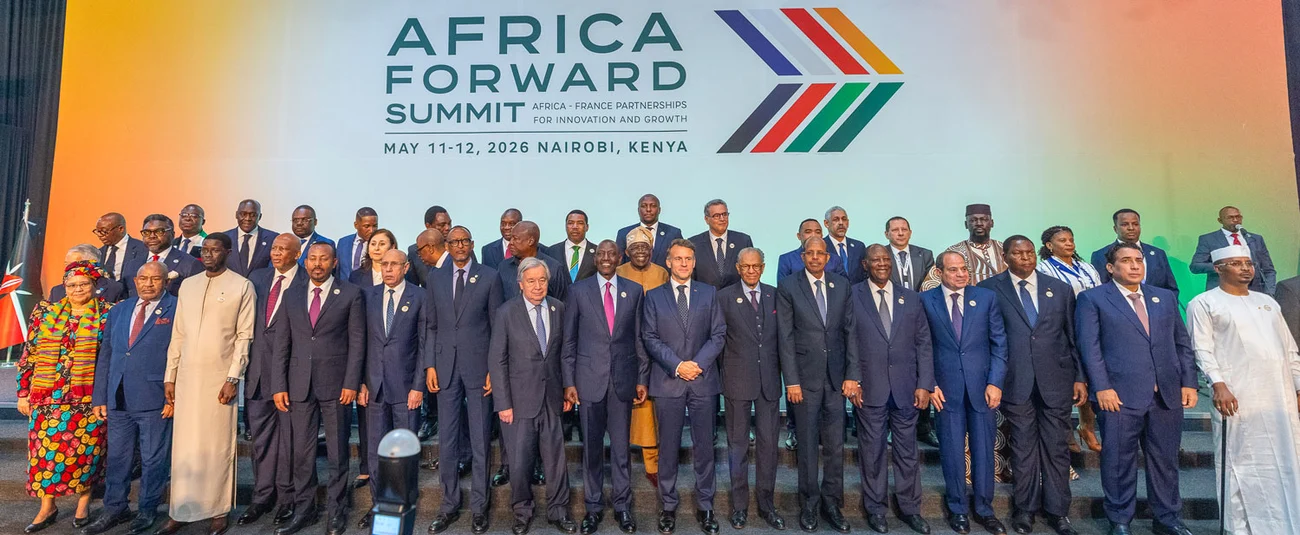
Imagine you’re sitting in a café in Nairobi last week. The city’s buzzing. Not because of the weather, but because of the summit happening a few kilometres down the road. Five thousand people. Suits. Headsets. Translators. Two presidents sharing a stage. They’re talking about “financial architecture,” “risk transformation,” and “co-investment paradigms.” It sounds like something you’d skim in a textbook and forget by lunch.
But if you listen closely, past the diplomacy and the acronyms, you’ll hear what they’re actually talking about: why a kid with a brilliant business idea still can’t get a loan. Why a clinic in rural Malawi can’t afford a backup generator. Why twelve to fifteen million young Africans walk into the job market every single year, and only three million formal jobs are waiting for them.
The Africa Forward Summit wasn’t about economics. It was about a gap. A gap so wide you can build a career staring at it and never cross it.
Here’s the thing nobody argues about: Africa isn’t broke.
President William Ruto said it. Dr. Sidi Ould Tah of the African Development Bank said it. The numbers back it up. The continent holds roughly four trillion dollars in domestic savings. Pensions. Insurance pools. Central bank reserves. It’s sitting in accounts, earning modest returns, waiting for a reason to move.
And yet, every year, Africa faces a four-hundred-billion-dollar hole between what it needs to build and what it can actually fund. We attract one percent of global institutional capital. One percent. The rest flows elsewhere, chasing perceived safety, familiar markets, predictable returns.
So the money exists. The projects exist. The people exist. What’s missing is the bridge.
That bridge has a name: NAFAD. And at the center of it is a Nairobi-based institution called ATIDI.
If your eyes just glazed over, I get it. Let’s translate.
Banks don’t refuse loans because they’re greedy. They refuse them because they’re scared. Risk feels unmanageable. Currency swings. Political cycles. Unproven business models. When a lender looks at a small solar kiosk in Kumasi or a agro-processing unit in Port Harcourt, they don’t see potential. They see uncertainty. And uncertainty doesn’t show up on a balance sheet.
ATIDI’s job is simple: step in, absorb some of that early risk, and tell the lenders, “It’s safe to move.” It’s not charity. It’s a safety net. A guarantee mechanism designed to make capital comfortable enough to actually flow.
France pledged support. The AfDB promised to leverage its triple-A balance sheet. The UN Secretary-General praised the ambition. Everyone nodded. Photos were taken. The joint statement was signed.
That’s progress. But progress isn’t a headline. It’s a disbursed loan. It’s a hired graduate. It’s a road that doesn’t wash away in the first rainy season.
“Well done is better than well said.” — African Proverb
The summit in Nairobi was necessary. But necessity isn’t the same as results.
Let’s be honest for a second. Safety nets don’t hire young engineers. Guarantees don’t keep vaccines refrigerated. Frameworks don’t pave the last mile to a village that’s been waiting on electricity since 2018. A market woman in Enugu doesn’t care about “disciplinary risk transformation.” She cares that her cold storage actually works. A tech founder in Dakar doesn’t need a “local currency facility.” She needs a loan that doesn’t require collateral she’ll never have.
The machinery matters. But only if it reaches the people it’s supposed to serve.
So what happens next?
France will follow through on its pledge. The AfDB will align its partners. ATIDI will build out its guarantee products. Local currency facilities will launch. MDBs will stop working in silos and start coordinating. That’s the plan.
But plans don’t move money. People do.
The real test isn’t whether NAFAD looks good on a slide. It’s whether a twenty-four-year-old in Lusaka can walk into a bank, present a viable business plan, and walk out with capital that doesn’t come with impossible terms. It’s whether a cooperative of farmers in western Kenya can access credit tied to harvest cycles, not rigid monthly repayments. It’s whether African savings actually fund African projects, instead of sitting idle while governments borrow abroad at higher rates.
“A river that forgets its source will run dry.” — Yoruba Proverb
Africa’s source isn’t foreign aid. It’s African capital. But capital without channels is just a puddle. And puddles don’t build economies.
The summit delivered something valuable: consensus. African and European leaders, multilateral institutions, private investors, and development partners all agreed on one thing. Africa must finance Africa. The bottleneck isn’t liquidity. It’s risk architecture. The solution is coordination, guarantees, and local market depth.
That’s a start. But consensus is just the opening scene. The rest of the movie gets written in boardrooms, in parliament, in bank branches, in the quiet decisions of people who control capital and the louder demands of people who need it.
Africa doesn’t need more conferences. It needs pipes. And pipes only work when water actually flows through them.
The money is there. The question isn’t whether Africa can finance itself. It’s whether the systems built to move that money will ever reach the people who need it most.
We’ll be watching. Not for the next summit. For the first loan that lands. For the first job that sticks. For the first road that doesn’t wait for foreign permission.
“If you want to go fast, go alone. If you want to go far, go together.” — Pan-African Proverb
The blueprint is drawn. The institutions exist. The capital is waiting.
Now let’s see who builds the bridge. And who actually gets to cross it.