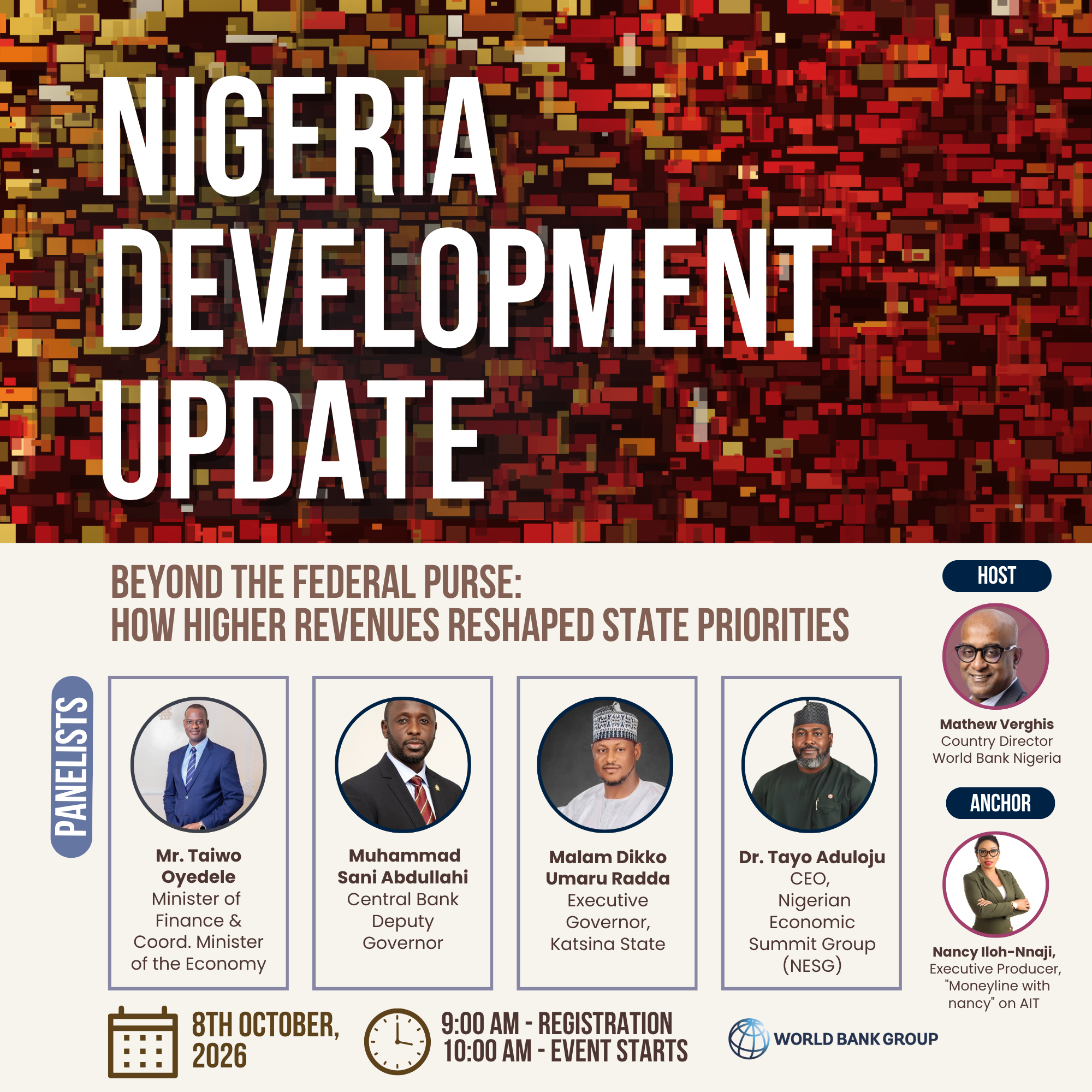
If you’ve scrolled through the World Bank’s Twitter, LinkedIn, or Instagram this week, you’ve seen it.
The comments section has become a town square of frustration.
“Stop lending to our government!”
“We didn’t ask for this debt!”
“The money disappears. We pay the price.”
And honestly? They’re not wrong.
But here’s the part the outrage often misses: The World Bank is, literally, a bank.
“The frog that jumps without looking where it lands will end up in the chicken’s mouth.” — West African Proverb
Let’s break this down—without the jargon, without the defensiveness, just plain truth.
An Analogy
Imagine a businessman in Onitsha. Let’s call him Chief Emeka.
Chief Emeka walks into GTBank, Zenith, or Access Bank and asks for a ₦500 million loan to expand his rice milling business.
The bank doesn’t ask: “Does the market want more rice?” or “Will this help the community?” (Well, maybe a little.)
The bank fundamentally asks: “Can you pay this back?”
They look at:
- Chief Emeka’s cash flow
- His collateral (land, equipment, guarantees)
- His track record
- The political stability of the region (yes, really)
If the answer is “yes, probably,” they lend. Not because they love Chief Emeka. Not because they’re trying to save Nigerian agriculture. Because banks make money by lending money and getting it back with interest.
The World Bank works the same way.
It’s not a charity. It’s not a grant-giving angel. It’s a multilateral financial institution with shareholders, a balance sheet, and a mandate to lend to governments it believes can service the debt.
When Nigeria borrows from the World Bank, it’s not because the Bank is forcing money on the country. It’s because Nigeria asked, and the Bank’s risk models said: “This government can probably repay.”
“Well done is better than well said.” — African Proverb
The anger isn’t about the Bank’s logic. It’s about Nigeria’s track record.
Why the World Bank Is Actually One of the “Good” Lenders
Here’s the uncomfortable truth: If Nigeria doesn’t borrow from the World Bank, it will borrow from somewhere else.
And the alternatives are often worse.
| Lender Type | Typical Interest Rate | Tenor | Conditionality |
|---|---|---|---|
| World Bank / IDA | 0-2% (concessional) | 25-40 years | Policy reforms, transparency measures |
| Eurobond markets | 7-12%+ | 7-15 years | Market sentiment, credit rating |
| Commercial banks (domestic) | 18-30% | 1-5 years | Collateral, high risk premium |
| Bilateral lenders | Mixed (often opaque) | Variable | Geopolitical strings, tied contracts |
The World Bank isn’t cheap because it’s generous. It’s cheap because it’s backed by wealthy member states who capitalise it to support development. That’s not charity—it’s strategic.
But cheap money in the wrong hands is still expensive.
“A river that forgets its source will run dry.” — Yoruba Proverb
The source isn’t the lender. It’s the borrower’s integrity.
The Real Issue (And Why Nigerians Are Right to Be Angry)
Nobody is protesting because the World Bank exists.
They’re protesting because:
🔹 Loans are taken, but results are invisible: Roads promised don’t appear. Power projects stall. The money moves; the impact doesn’t.
🔹 Debt servicing eats the budget: Nigeria now spends more on debt repayment than on health, education, or infrastructure combined. That’s not sustainable. That’s suffocation.
🔹 Accountability is absent: When funds disappear, who answers? Not the lender. Not the contractor. Rarely, the official. Always, the citizen.
🔹 The next generation inherits the bill: Young Nigerians didn’t vote for these loans. But they’ll pay for them—through higher taxes, reduced services, or both.
“When elephants fight, it is the grass that suffers.” — Swahili Proverb
In this story, the elephants are lenders and borrowers. The grass is everyone else.
So What’s the Solution?
It’s not “stop all lending.” That’s unrealistic—and potentially harmful. Nigeria still needs capital for infrastructure, climate adaptation, health systems, and human capital.
The solution is smarter borrowing:
✅ Transparency: Publish loan terms, procurement contracts, and implementation timelines. Let citizens track the money.
✅ Parliamentary oversight: Ensure loans are debated, approved, and monitored by elected representatives—not just executive decree.
✅ Results-based disbursement: Tie tranches to verified outcomes, not just signatures.
✅ Debt sustainability analysis: Before borrowing, ask: “Can we afford this? What’s the plan to repay? What happens if revenues fall?”
✅ Citizen engagement: Involve communities in project design and monitoring. If people benefit, they’ll protect the investment.
“If you want to go fast, go alone. If you want to go far, go together.” — Pan-African Proverb
Borrowing is easy. Repaying is hard. Doing both wisely requires a village.
The Bottom Line
The World Bank isn’t the villain. It’s a bank. It lends to governments it believes can repay. That’s its job.
The real question isn’t “Should the World Bank lend to Nigeria?”
It’s “Should Nigeria borrow—and if so, on what terms, for what purposes, and with what safeguards?”
Nigerians storming social media aren’t anti-development. They’re anti-waste. Anti-corruption. Anti-empty promises.
And they’re right.
“The truth is like a lion; you don’t have to defend it. Let it loose; it will defend itself.” — African Proverb
The truth here is simple: Cheap money is still expensive if it’s misused.
The World Bank will keep lending. Nigeria will keep borrowing. The only variable we control is whether the money actually builds something—or just builds debt.
That’s not a Bank problem. That’s a Nigeria problem.
And it’s one only Nigerians can solve.