Let’s talk about rent. Not the abstract kind policymakers debate in air-conditioned conference rooms while sipping mineral water. The kind that keeps you awake at 2 a.m., staring at a ceiling that leaks when it rains, wondering how a degree in anything is supposed to cover a deposit that costs more than your first car. You’re twenty. You’ve been told Africa’s cities are “booming.” But booming doesn’t pay the landlord. Booming doesn’t fix the drainage. Booming just means more people competing for fewer roofs, higher prices, and shorter tempers.
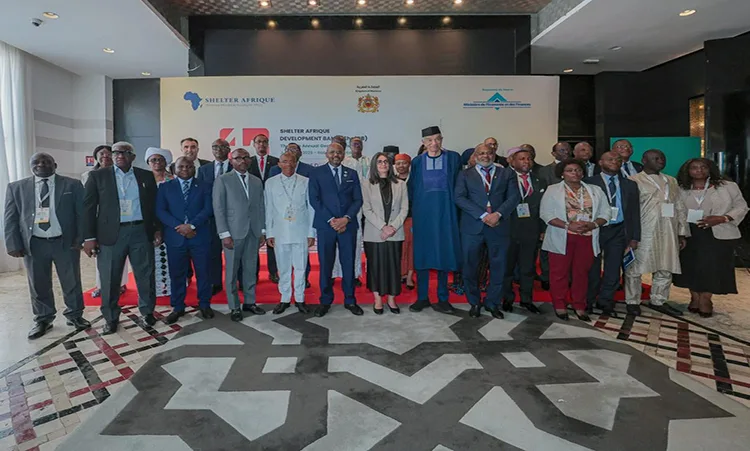
So this week, while you were probably trying to figure out how to stretch your data bundle or keep applying for online work, a room full of ministers, bankers, and development officials gathered in Rabat, Morocco. They called it the 45th Annual General Meeting of Shelter Afrique. They changed the logo. They changed the name. Shelter Afrique is now ShafDB—Shelter Afrique Development Bank. They used words like multilateral, value chain, and resilient urban ecosystems. If you rolled your eyes, I don’t blame you. Institutions love rebranding. It’s cheaper than rebuilding, and it photographs better.
But strip away the theater, and you’ll find a ledger that actually matters. Africa is short fifty-three million homes. Not units. Not “housing stock.” Homes. Places where a young nurse doesn’t spend half her salary on a room with no running water. Where a family can sleep without the roof threatening to cave in. Where a kid can study without a generator coughing in the background. To close that gap, the continent needs roughly one point three trillion dollars. Let that number sit. Not million. Trillion. That’s not a budget line. That’s a reconstruction.
For years, housing in Africa was treated like a social welfare afterthought. A pilot project here. A ribbon-cutting there. A strategy document that gathered dust while rents climbed and informal settlements spread like cracks in dry earth. ShafDB’s rebrand isn’t just corporate vanity. It’s a structural shift. They’re no longer just a specialized housing fund. They’re a full multilateral development bank. What does that mean in plain terms? It means they can raise capital at scale. It means they can issue bonds, pool sovereign guarantees, and absorb early-stage risk so private money – pension funds, commercial banks, impact investors – doesn’t run screaming at the first sign of uncertainty. As their chairman put it, bluntly: success won’t be measured by meetings held or policies approved. It’ll be measured by homes financed, cities improved, jobs created, lives transformed. In other words: the talking phase is over. The pouring phase has begun.
But let’s be clear about what we’re actually building. This isn’t just about four walls and a roof. It’s about climate survival. Africa’s cities are heating up. Floods are rewriting street maps. Heatwaves are turning concrete into ovens. If you finance housing without drainage, without sustainable materials, without grid integration, you’re not building resilience. You’re building future disaster zones. And it’s about dignity. About the construction worker who knows how to lay brick and wire solar but gets hired per day, paid in cash, left without insurance or certification. About the informal vendor whose market gets bulldozed for a “modern” development that prices out the very people who keep the neighborhood alive. Urban development isn’t architecture. It’s anthropology with a budget.
Now, I’m not going to sit here and tell you a new logo fixes a broken system. Rebranding doesn’t pour foundations. Capital mobilization doesn’t automatically mean inclusion. There’s a long, well-documented history of “affordable housing” projects that quietly become middle-class enclaves while the most vulnerable get pushed further into the periphery. There’s a pattern of infrastructure loans that look brilliant on a spreadsheet but bleed out in procurement delays, currency swings, and political turnover. So watch closely. Watch where the money actually flows. Watch whether informal settlements get upgraded or erased. Watch whether climate adaptation is baked into every project or tacked on as a compliance checkbox. Watch whether progress is tracked publicly, or buried in annual reports that read like fiction.
Africa doesn’t need more blueprints. It needs bricks. It needs pipes. It needs wired grids and trusted institutions and leaders who understand that housing isn’t a charity line item – it’s economic infrastructure, climate defense, job creation, and dignity wrapped in concrete and glass. ShafDB has the mandate. Morocco set the stage. The gap is mapped. The capital is waiting. Now it’s about who picks up the trowel. And who ensures it’s laid where it’s actually needed.
The blueprint is done. The financing is wiring. Now let’s see what gets built.