
Let me tell you about a field in Sudan.
Not the kind you see in travel brochures. The kind where the soil remembers war. Where seeds are planted between raids. Where harvest isn’t just about weather – it’s about whether the road to market is safe, whether the storage shed is still standing, whether the next shipment of fuel arrives before the generator dies.
Now imagine someone looking at that field and saying: “What if we didn’t just send food? What if we helped the people who grow it?”
That’s the quiet revolution behind a new $87 million project called BOOST – and it might be one of the most important bets Africa is making right now.
THE NUMBERS THAT MATTER (IN HUMAN TERMS)
Here’s what BOOST actually means:
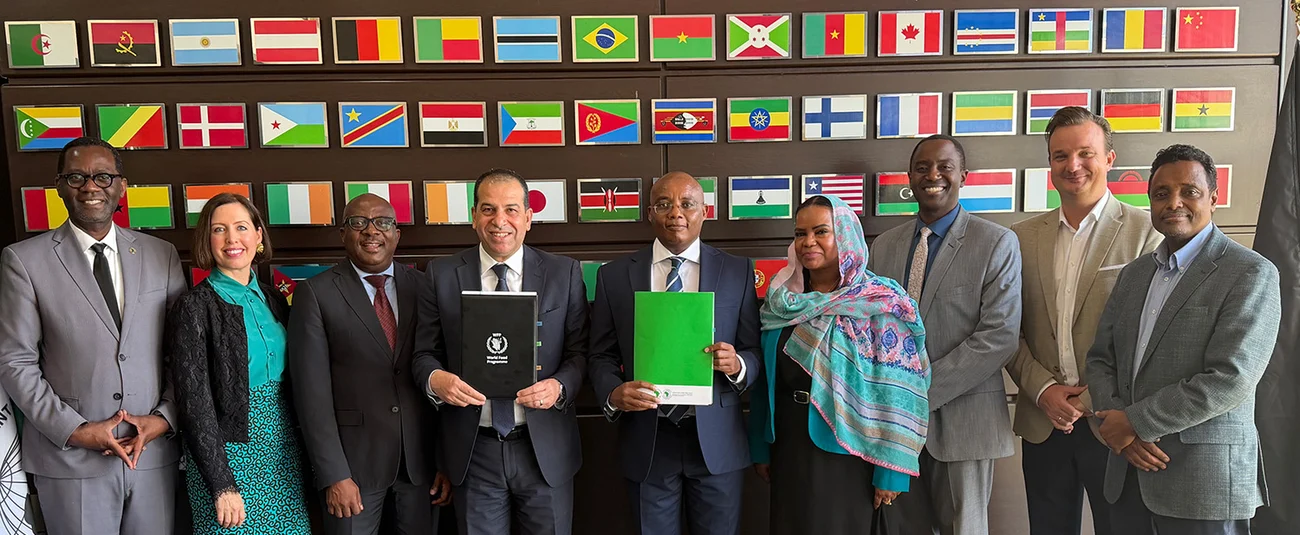
$87 million over four years – from the African Development Bank, implemented by the UN World Food Programme.
230,000 farming households in Sennar and Blue Nile states – regions that used to feed the nation, now struggling to feed themselves.
Nearly 1 million metric tons of cereals and pulses expected over the project’s life. That’s enough to meet the annual cereal needs of ~9 million people. Pulse needs for ~15 million.
19+ million people in Sudan currently facing crisis-level hunger or worse. [[1]]
A shift in strategy: from sending food to Sudan, to helping Sudan grow its own food – even in emergency conditions.
In plain English? This isn’t a handout. It’s a hand-up.
“Well done is better than well said.” — African Proverb
Promises don’t fill bowls. Harvests do.
THE REAL STORY (BEYOND THE HEADLINES)
Here’s what the official announcement won’t tell you:
Farmers in Sudan didn’t stop farming when the war started.
They adapted. They planted in shorter windows. They stored grain in hidden locations. They shared seeds across villages when supply chains broke. They kept going—not because they were heroic, but because stopping meant starvation.
Abdallah Alwardat, WFP’s Sudan Country Director, said something powerful at the launch: “Farmers who already work with WFP in our resilience activities told me that they did not require food assistance even during the war. On the contrary, farmers supported by WFP have been able to preserve their agricultural schemes and even improve their yields of wheat and sorghum.”
Let that sink in.
In the middle of conflict, with gunshots and roads blocked, farmers with the right support didn’t just survive. They produced more.
That’s not luck. That’s resilience. And resilience can be scaled.
How BOOST Actually Works
Think of BOOST as a toolkit, not a cheque.
It doesn’t just give farmers money and hope for the best. It gives them:
🌱 Better seeds and techniques: Training on climate-resilient crops, water management, and post-harvest handling to reduce waste.
🌱 Market linkages: Helping farmers connect to buyers so their harvest doesn’t rot in storage.
🌱 Group organization: Strengthening farmer cooperatives so they can bargain collectively, share equipment, and access credit.
🌱 Conflict-sensitive design: Working in rainfed areas less affected by active fighting, with flexible implementation that adapts to security shifts.
And here’s the clever part: The AfDB provides the capital. WFP provides the on-the-ground implementation. Other UN agencies and research institutions add technical expertise. Everyone plays to their strengths.
“A single broomstick cannot sweep the compound.” — Yoruba Proverb
No single agency can fix Sudan’s food system. But together, they might just clear a path.
The DNA take
Food aid saves lives. Food sovereignty changes them.
BOOST isn’t pretending to end Sudan’s crisis. No single project can do that. But it is making a bet: that even in the darkest moments, investing in local production is smarter than perpetuating dependency.
“The truth is like a lion; you don’t have to defend it. Let it loose; it will defend itself.” – African Proverb
The truth here is simple: You can ship grain across borders. Or you can help people grow it themselves. One feeds a community for a week. The other feeds a nation for a generation.
The AfDB and WFP aren’t just funding a project. They’re funding a principle: that resilience isn’t built in warehouses. It’s built in fields. In cooperatives. In markets. In the quiet, stubborn determination of people who refuse to let war steal their future.
Sudan’s farmers have already proven they can produce under pressure. Now they need the systems to match their grit.
This project is one step. One partnership. One harvest at a time.
The soil is ready. The seeds are sown. Now let’s watch what grows.