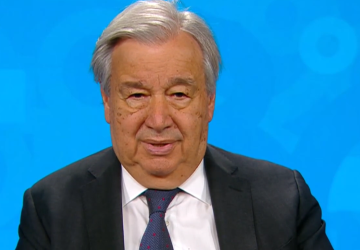
ABIDJAN, April 28, 2026 — United Nations Secretary-General António Guterres addressed the Africa Regional Forum on Sustainable Development today, outlining both opportunities and challenges facing the continent’s development trajectory.
In a video message to the forum, Guterres cited the African Continental Free Trade Area, expanding renewable energy potential, growing digital connectivity, and a young skilled workforce as key opportunities for Africa.
He also identified urgent challenges, including limited access to safe water and electricity for hundreds of millions of people, infrastructure gaps, rapid urbanization, rising trade barriers, ongoing conflicts, and climate-related disruptions.
Financing Gap and Debt Burden
Guterres stated that Africa faces an annual development financing gap of up to $1.6 trillion. This figure aligns with broader UN estimates that the global Sustainable Development Goals financing gap now exceeds $4 trillion annually, with developing countries facing shrinking fiscal space and high borrowing costs.
According to S&P Global Ratings, African sovereigns’ gross commercial borrowing is projected to reach $155 billion in 2026, up from $140 billion in 2025. Total outstanding African sovereign commercial debt is estimated to reach just over $1.2 trillion, or approximately 45% of GDP, by the end of 2026.
Some African countries currently pay interest rates up to three times higher than benchmark rates, limiting fiscal space for sustainable development investments. The median borrowing amount for the 27 rated African issuers is approximately $1.5 billion, notably lower than global peers, reflecting both smaller economy sizes and greater reliance on concessional financing.
Energy Access and Investment Needs
Nearly 600 million people in Africa lack access to electricity, according to the International Energy Agency. Reaching universal electricity access will require annual investment of approximately $15 billion to scale up generation capacity, grid networks, and decentralized solutions.
Less than $2.5 billion was committed for new electricity access connections in sub-Saharan Africa in 2023, indicating a significant shortfall relative to needs. Africa’s electricity demand is projected to grow by an average of 3.9% annually between 2026 and 2030.
Trade and Regional Integration
Intra-African trade is projected to grow by 10% in 2026, reaching approximately $230 billion, driven by implementation of the African Continental Free Trade Area. However, intra-African trade remains low relative to other regions, with official statistics indicating continued barriers to cross-border commerce.
The African Development Bank estimates an annual infrastructure financing gap of approximately $402 billion for Africa, equivalent to roughly 13.7% of the continent’s projected GDP by 2030.
Policy Recommendations
Guterres called for three priority actions:
- Integrated solutions: Investing in approaches where clean energy drives industry, infrastructure enables trade, and technology powers jobs.
- Global financial solidarity: Ensuring Africa’s meaningful participation in global financial institutions and reforming the international financial architecture to reflect contemporary economic realities.
- Climate and energy investment: Mobilizing significant investment in Africa’s electrification and a just transition to renewable energy.
The Secretary-General referenced the Sevilla Commitment, adopted at the Fourth International Conference on Financing for Development in 2025, which established a renewed global framework for financing sustainable development.
Forum Context
The Africa Regional Forum on Sustainable Development serves as a platform for reviewing progress on the 2030 Agenda for Sustainable Development at the regional level. The 2026 forum brought together policymakers, development partners, private sector representatives, and civil society organizations to discuss evidence-based approaches to sustainable development challenges.
The African Development Bank, acting as a key partner in regional development financing, has committed to scaling up co-financing arrangements to increase development impact across the continent.